

Living in the UK often means feeling cold—damp commutes, windy walks, and chilly homes made worse by high heating bills. Even with layers, you can still end up bulky, restricted, and not truly warm—especially if you have cold sensitivity (like Raynaud’s).
Heated baselayers are a simple upgrade. They’re lightweight base layers that give targeted, adjustable warmth to your body without heavy clothing. They’re designed for UK conditions—wet cold, wind, and sudden temperature drops—and can help you stay comfortable outdoors while relying less on expensive central heating.
In this guide, you’ll learn how heated baselayers work, what to buy for UK weather, and how to use them for the best warmth and battery life.
What Are Heated Baselayers & How Do They Work?
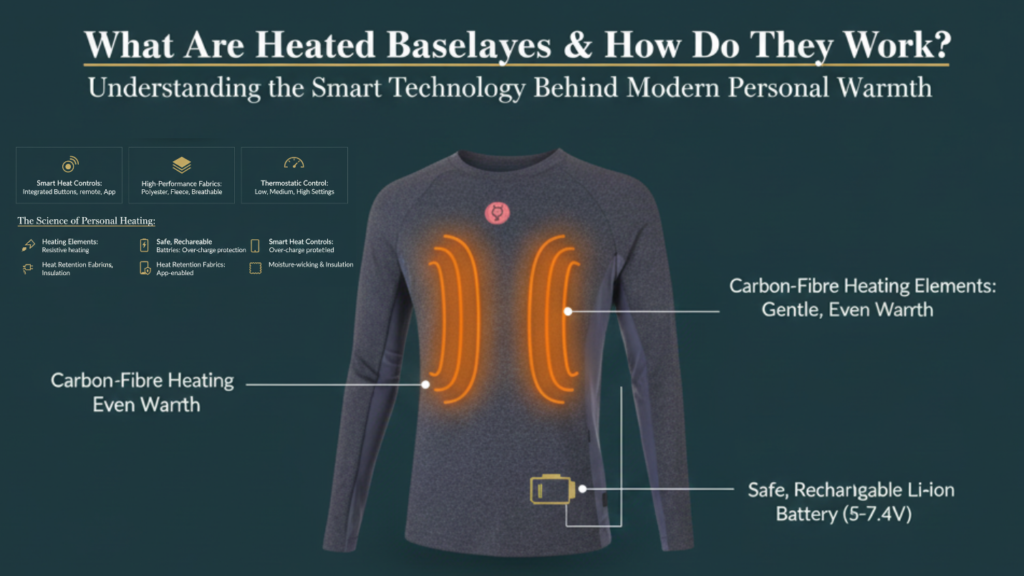
Heated baselayers are wearable garments engineered with built-in heating technology that delivers controlled warmth directly against your skin. For UK residents dealing with long months of damp cold, they provide an efficient, targeted alternative to bulky winter layers or constant central heating. Understanding how they work helps you choose reliable, safe, and effective heated clothing for 2026.
What Are Heated Baselayers & How Do They Work?
How Heated Baselayers Work ?
What they do
- Heated baselayers generate heat using built-in heating panels (not just “trap” body heat like normal thermals).
- Best for UK damp, windy winters where standard layering can feel cold fast.
How the heating works
- Heating elements (usually carbon-fibre filaments or thin alloy wires) are stitched into key areas:
- Upper back / lower back
- Chest / abdomen
- Power flows through the elements → resistance creates steady warmth (similar to heated car seats).
Battery system (rechargeable)
- Uses lightweight lithium-ion batteries (like a phone power bank).
- Typical UK models:
- 5V–7.4V
- 4,000–10,000 mAh
- ~2–8 hours heat (depends on setting + battery size)
- Common safety protections:
- Overcharge protection
- Temperature control
- Short-circuit protection
Temperature controls
- Usually 3 heat levels:
- Low: mild days / longest battery
- Medium: everyday warmth
- High: cold snaps / strong wind
- Control methods:
- Button on garment
- Small remote module
- Some models: app control
- Many use thermostat-style regulation to keep warmth steady as weather changes.
Fabric tech (why it matters in the UK)
- Good heated baselayers use:
- Moisture-wicking polyester (helps in damp conditions)
- Nylon + elastane (stretch + comfort)
- Breathable weave (reduces sweat/overheating)
- Fabric traps warm air while heating panels add heat—more effective than normal thermals in wet/windy weather.
Key Benefits for UK Residents in 2026
Why Heated Baselayers Are Becoming a Must-Have for British Weather
Stay Warm in Britain’s Unpredictable Climate
Targeted Warmth Exactly Where Your Body Needs It
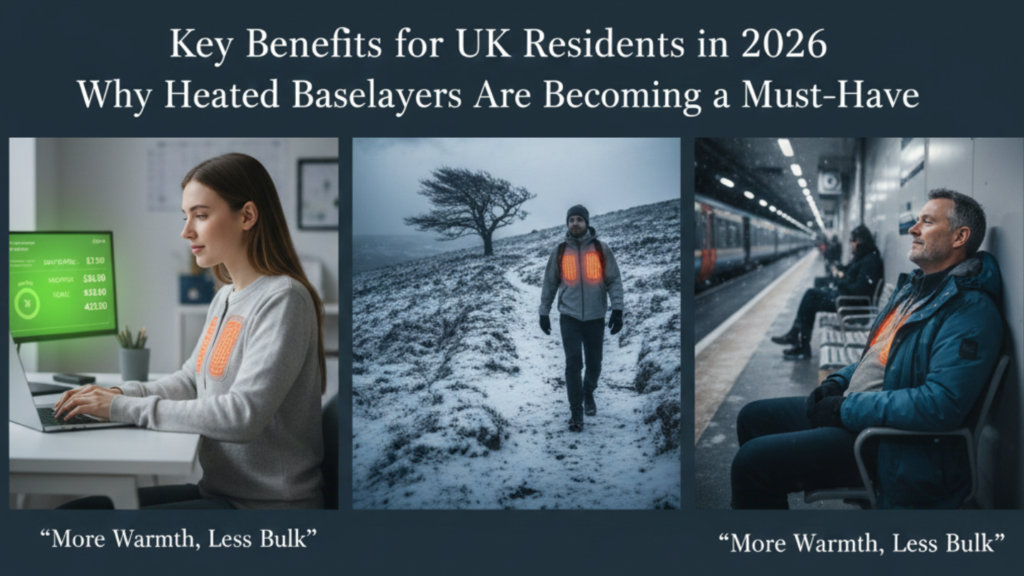
Heated baselayers deliver focused heating to key areas like the back and chest — the regions that lose warmth fastest in damp winds. Instead of warming the air around you (like central heating), they warm you, directly and efficiently.
Perfect for Cold, Damp & Windy UK Weather
Traditional layers struggle against moisture and wind chill, but heated baselayers cut through that discomfort instantly. The warmth remains stable even when you’re exposed to drizzle, coastal winds, or biting temperature drops.
More Warmth, Less Bulk
Because the heat is built in, you no longer need multiple heavy layers. This means better movement, less restriction, and a more comfortable fit for everyday UK routines.
UK Scenario
A person working from home for 8 hours a day:
- Central heating running those 8 hours = higher gas/electricity bills
- Heated baselayer running on a small battery = pennies per hour
Result: Meaningful savings while staying warm without heating the whole house.
Key benefits for UK residents in 2026
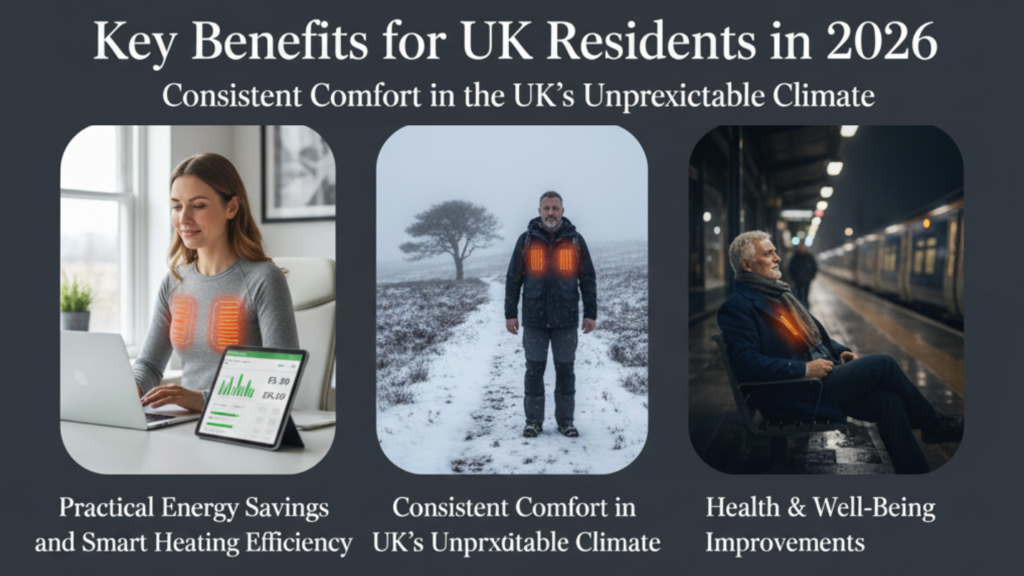
- Steady warmth in UK weather: Heated baselayers warm key heat-loss areas (core, lower back, thighs), so they feel better than normal layers in damp air, wind, and sudden cold snaps.
- No bulk: Thin and flexible—comfortable for walking, cycling, hiking, commuting, or waiting outdoors.
- Cheaper comfort: Warming your body directly can cost less than heating the whole home. Many UK households pair a slightly lower thermostat with personal heating.
- Simple cost check: An energy calculator can compare battery charging cost (often just a few pence) vs central heating for the same hours—helpful for long work-from-home days.
Types of heated baselayers: tops, bottoms and full sets
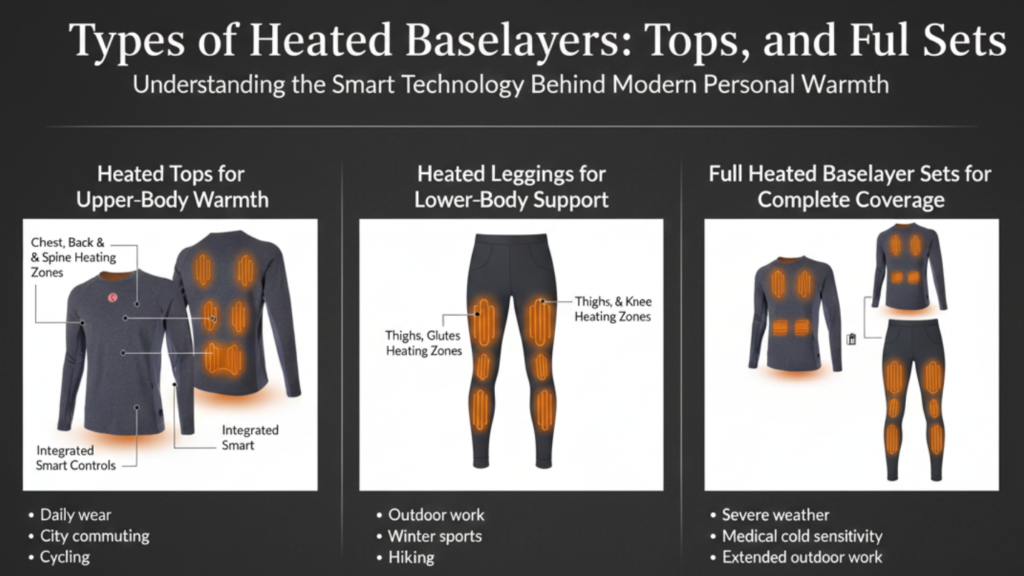
Heated tops (upper body): Long-sleeve baselayers that warm your core with heat zones on the chest, spine, and upper back. Ideal for commuting, cycling, and daily wear under a jacket. Common fabrics: stretch synthetics or merino blends.
Heated leggings (lower body): Warm thighs, glutes, and sometimes knees to reduce “cold legs” in wind or long standing. Often slightly thicker fabric. Great for winter walks, outdoor work, fishing, skiing, and hill trips.
Full heated sets (top + bottom): Complete coverage for very cold/exposed conditions or long outdoor shifts. Some sets run from one battery system. Useful for people who need consistent warmth (including cold sensitivity).
Essential Buying Tips for UK Heated Baselayers (2026)
- Battery life (mAh): Bigger mAh = longer heat. Typical runtime: 6–8 hrs on low, 2–3 hrs on high.
- Charging: Prefer USB-C so you can use standard chargers/power banks (no proprietary cables).
- UK weather tip: Carry a spare power bank, especially for Scotland/coastal wind. Keep the battery warm in an inner pocket—cold reduces runtime.
- Heat zones:
- Chest + back (core heat): best for commuting, outdoor work, sitting/standing still.
- Torso + limbs: better for hiking, cycling, active use.
- Heat settings: Choose multiple levels (low/medium/high) to match drizzle, wind, and frosty mornings without wasting battery.
- Material:
- Synthetic blends: quick-drying (good for rain).
- Merino blends: breathable and warmer when damp (good for humid UK winters).
- Fit: Must be snug for efficient heat transfer. Loose fit = wasted heat + battery.
- Comfort: For active use, pick flatlock/seamless designs to reduce chafing.
- Durability & care:
- Look for machine-washable (gentle cycle) with battery removable.
- Prefer sealed electronics for damp conditions.
- Check availability of replacement batteries/repairs—helps it last multiple seasons.
Top Heated Baselayers for UK Residents in 2026
Choosing heated baselayers can be confusing—most brands claim they’re the warmest or last the longest. This guide keeps it simple: recommendations are based on real UK conditions (damp commutes, windy outdoor days, cold countryside use) and practical wear experience, including for people with cold sensitivity.
Vulcan Heated Baselayer (Top Pick for Everyday Use)
- Best for: commuting, cycling, daily winter wear
- Heat zones: chest + back (core warmth)
- Fit/fabric: soft, flexible synthetic blend; snug but comfortable
- Performance: strong on medium for typical UK day use; high gives quick warmth outdoors
- Note: For long outdoor sessions, bring a spare power bank (high settings drain faster)
Vulcan Heated Jacket (Best for Longer Outdoor Time)
- Best for: hiking, outdoor work, coastal wind, long shifts outside
- Stronger warmth: heating panels + insulated outer shell
- Benefit: keeps you warm with less layering, while staying mobile in changeable UK weather
Helping UK Buyers Choose the Right Heated Gear
Choosing the right heated product becomes much easier when you compare your daily routine, the type of warmth you need, and how long you spend outdoors. The Vulcan Heated Baselayer is the most versatile choice for everyday UK life. It offers targeted heat directly against the skin and works perfectly for commuting, working from home, running errands, or layering under any jacket. For most British users, this is the simplest and most economical starting point, especially in damp or mild-cold conditions where full heavy jackets feel unnecessary.
your warm future in the UK
Heated baselayers deliver reliable warmth, help with cold sensitivity, and can reduce heating costs by warming you directly. Choose a trusted brand, pick a model that suits your routine, and layer sensibly. If you have a medical cold issue, speak to a professional—then enjoy a warmer, easier UK winter.