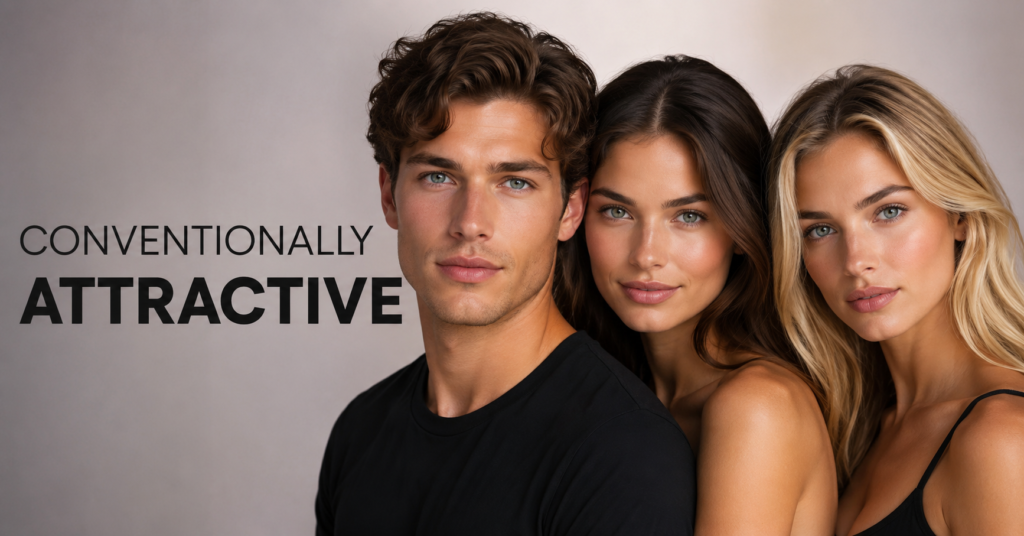

Beauty has always fascinated audiences, but the idea of being conventionally attractive has changed dramatically over time. In today’s entertainment industry, many celebrities fit traditional beauty standards, while others have gained worldwide admiration by embracing their individuality. This shift has sparked conversations about what society considers beautiful and why personality, confidence, and authenticity now matter just as much as physical appearance.
Understanding What Conventionally Attractive Means
The phrase conventionally attractive refers to people whose appearance closely matches widely accepted beauty standards within a particular culture or society. These standards often include balanced facial features, clear skin, healthy hair, and body proportions that have historically been viewed as appealing.
However, beauty standards are not fixed. They evolve with time, culture, fashion, and media influence. What was considered attractive decades ago may not perfectly match today’s ideals, and different regions around the world continue to celebrate different features.
Celebrities often become the public faces of these changing standards because millions of people see them through films, television, magazines, social media, and advertising campaigns. Their influence extends far beyond entertainment, shaping conversations about appearance, confidence, and self-image.
How Hollywood Created Traditional Beauty Standards
For decades, Hollywood promoted a fairly narrow definition of beauty. Classic movie stars were carefully styled to project glamour, elegance, and perfection. Studios invested heavily in makeup artists, hairstylists, photographers, and costume designers to create unforgettable public images.
Actors such as Audrey Hepburn, Paul Newman, Marilyn Monroe, and Cary Grant became timeless examples of classic attractiveness. Their facial symmetry, charisma, and polished appearance helped establish standards that many people associated with movie-star beauty.
Yet even during those years, charisma often mattered just as much as appearance. These stars became icons not only because they looked good but because audiences connected with their talent, confidence, and memorable performances.
Modern Celebrities Are Expanding the Definition of Beauty
Today’s entertainment industry presents a much broader picture of attractiveness. Modern celebrities come from diverse ethnic backgrounds, body types, ages, and personal styles. This representation has helped audiences appreciate that beauty exists in many forms.
Many stars once considered “different” from traditional Hollywood ideals have become global fashion icons. Their success demonstrates that confidence, authenticity, and individuality can be just as influential as meeting conventional standards.
Social media has accelerated this change by allowing celebrities to show more natural moments rather than only polished magazine covers. Fans now appreciate honesty, vulnerability, and genuine personalities alongside physical appearance.
As a result, being conventionally attractive is no longer the only path to becoming one of the world’s most admired public figures.
Why Fans Connect With More Than Physical Appearance
One reason celebrities become beloved is that audiences develop emotional connections with them. A compelling performance, inspiring life story, or relatable personality often leaves a stronger impression than appearance alone.
Actors who consistently deliver memorable performances earn respect through their talent. Musicians create emotional bonds through their songs. Athletes inspire fans through determination and discipline. These qualities build lasting admiration that extends far beyond looks.
Confidence also plays an important role. A celebrity who embraces their individuality often appears more attractive because authenticity naturally draws people in. This explains why many stars become fashion and lifestyle icons despite not fitting every traditional beauty expectation.
The Science Behind Physical Attraction
Researchers have spent decades studying why humans find certain faces attractive. While personal preferences vary widely, some features appear repeatedly across different cultures.
Facial symmetry is often associated with health and genetic fitness. Clear skin may subconsciously signal wellness. Expressive eyes and genuine smiles create warmth and trust, making someone appear more approachable.
However, scientific studies also show that familiarity, personality, shared interests, and emotional experiences significantly influence attraction. Someone’s sense of humor, intelligence, kindness, and confidence frequently become more important as relationships develop.
This explains why many celebrities who may not initially appear conventionally attractive to everyone still attract enormous fan bases worldwide.
Social Media Has Changed Celebrity Beauty
The rise of Instagram, TikTok, and other social platforms has transformed how people view famous personalities. Instead of seeing only professionally edited photos, fans often watch celebrities cooking, traveling, exercising, or spending time with family.
These everyday moments reveal imperfections that audiences can relate to. Acne, wrinkles, gray hair, and natural aging have become more visible, encouraging healthier conversations about realistic beauty expectations.
Many celebrities now openly discuss mental health, body image, cosmetic procedures, and the pressures of maintaining a public appearance. Their honesty helps reduce unrealistic expectations while encouraging self-acceptance.
This transparency has gradually shifted attention from achieving perfection toward embracing authenticity.
The Fashion Industry’s Growing Inclusivity
Fashion brands have also broadened their understanding of beauty. Campaigns increasingly feature models from different backgrounds, ages, body sizes, and abilities.
Luxury designers, beauty companies, and magazine editors recognize that consumers appreciate authentic representation. This diversity allows more people to see themselves reflected in advertising and entertainment.
Celebrity ambassadors now represent much wider definitions of style and elegance than in previous decades. Their success demonstrates that fashion is no longer reserved for one specific appearance or body type.
The result is an industry that continues moving toward greater inclusivity while still celebrating exceptional style and creativity.
Confidence Often Outshines Appearance
Many entertainment professionals agree that confidence is one of the most attractive qualities anyone can possess. Celebrities who carry themselves with self-assurance often leave stronger impressions than those relying only on physical beauty.
Confidence influences posture, communication, facial expressions, and overall presence. It creates charisma that cameras naturally capture and audiences remember.
Some of the world’s most respected actors, musicians, and television personalities became successful because they developed distinctive identities rather than trying to imitate others. Their willingness to remain authentic became part of their personal brand.
This is why discussions about being conventionally attractive increasingly include confidence, emotional intelligence, and genuine character instead of focusing only on appearance.
Beauty Standards Will Continue to Evolve
History shows that beauty trends constantly change. Hairstyles, fashion preferences, makeup techniques, and body ideals have all shifted across generations.
Future celebrities will likely redefine attractiveness in new ways as society becomes even more diverse and globally connected. Advances in technology, changing cultural values, and increased representation will continue influencing how beauty is perceived.
Rather than replacing traditional beauty standards, these changes are expanding them. Today’s audiences appreciate uniqueness alongside classic attractiveness, creating space for many different forms of beauty to coexist.
Conclusion
The idea of being conventionally attractive remains part of popular culture, but it no longer tells the whole story of celebrity success. While traditional beauty standards still influence fashion, entertainment, and advertising, audiences increasingly admire authenticity, confidence, talent, and individuality.
Modern celebrities prove that lasting influence comes from far more than appearance. Their achievements, personalities, and ability to connect with people create admiration that extends beyond physical features. As beauty standards continue evolving, the entertainment industry is becoming more inclusive, allowing a wider range of faces and stories to inspire millions around the world.
Ultimately, the most memorable celebrities are those who combine talent with authenticity. Whether they fit conventional ideals or challenge them entirely, they remind us that true appeal grows from confidence, character, and the ability to make a meaningful impact.
FAQ
What does conventionally attractive mean?
Conventionally attractive describes a person whose appearance closely matches widely accepted beauty standards within a particular culture or society. These standards often include facial symmetry, healthy skin, and balanced features.
Can someone be successful without being conventionally attractive?
Absolutely. Many successful celebrities have built remarkable careers through talent, confidence, charisma, and authenticity rather than relying solely on traditional beauty standards.
Are beauty standards the same around the world?
No. Beauty standards vary between cultures and continue evolving over time. Features admired in one region may differ significantly from those celebrated elsewhere.
Why do celebrities influence beauty trends?
Celebrities receive extensive media attention through films, television, fashion campaigns, and social media. Their visibility naturally shapes public conversations about style, beauty, and self-expression.
Is personality more important than appearance?
While first impressions often involve appearance, long-term admiration usually depends on personality, talent, kindness, confidence, and authenticity. These qualities help create lasting connections with audiences.