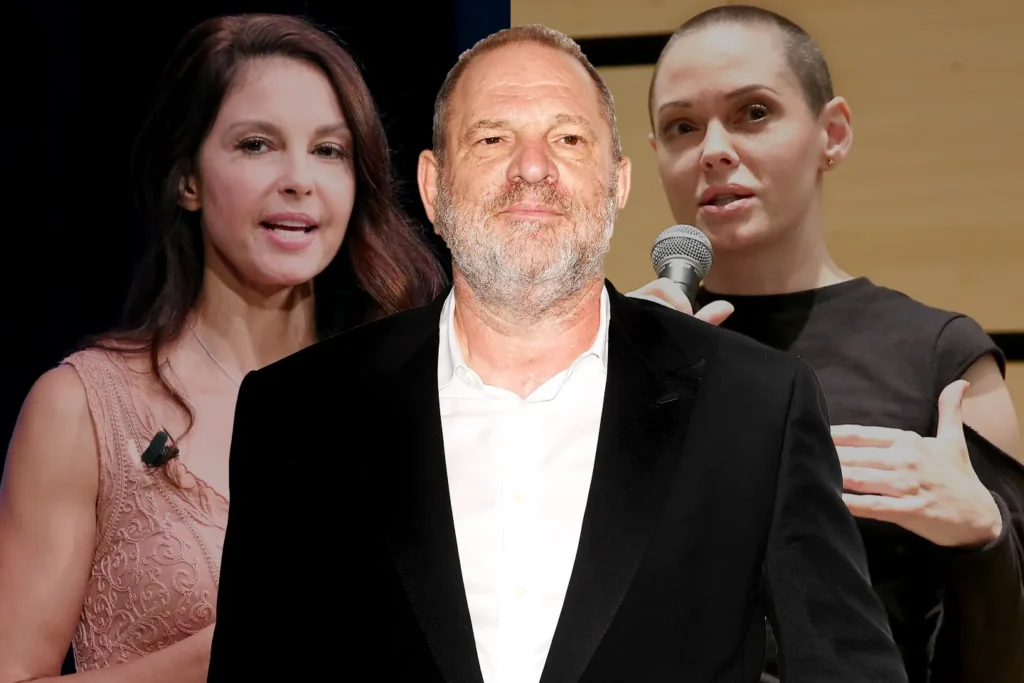

The story of Ashley Judd Harvey Weinstein became one of the most widely discussed chapters of Hollywood’s reckoning with sexual harassment. In 2017, Judd was among the first prominent actresses to publicly identify Harvey Weinstein and describe an alleged encounter from years earlier. Her account helped bring renewed attention to the way powerful figures could allegedly use professional influence to pressure women behind closed doors.
Judd’s story was not simply about one uncomfortable meeting. It became part of a much larger conversation about workplace power, retaliation, silence and the difficulty many women faced when deciding whether to speak about alleged misconduct. Her experience also became connected to one of the most significant cultural shifts in the entertainment industry in decades.
Ashley Judd’s 1997 Encounter With Harvey Weinstein
Ashley Judd’s account centered on a meeting she believed was related to her acting career. In 1997, she went to a Beverly Hills hotel expecting what she understood to be a professional breakfast meeting with Weinstein. According to Judd, the meeting instead became an uncomfortable encounter in which Weinstein made unwanted requests involving massages and watching him shower.
Judd later described the situation publicly, explaining that she repeatedly tried to refuse his advances and eventually negotiated a way to leave the room. She said she made a joking promise involving winning an Academy Award in one of his movies, after which she was able to get away.
Her description became important because she was willing to discuss an incident that had happened roughly two decades earlier. In interviews, Judd also spoke about the complicated feelings that can follow such experiences, including shame and self-questioning. Her account emphasized that people do not always react to threatening situations in the dramatic way outsiders might expect.
The details of Judd’s account were reported during the initial 2017 coverage of Weinstein. Weinstein denied allegations of non-consensual sexual activity and has consistently maintained that his sexual encounters were consensual.
Why Ashley Judd Spoke Publicly
Judd was one of the first high-profile actresses to publicly accuse Weinstein of sexual misconduct after investigative reporting in 2017 brought multiple allegations into the open. Her decision to speak gave the broader story a recognizable face and encouraged greater discussion about experiences that had often remained private.
The significance of Ashley Judd Harvey Weinstein goes beyond the names themselves. Judd’s account illustrated the imbalance that can exist when an established industry executive meets with an actress whose career depends partly on professional relationships and opportunities.
She later became associated with the wider #MeToo movement and continued speaking about issues involving sexual harassment, violence and women’s rights. Her public work helped keep attention on the importance of listening to allegations and examining workplace structures that can make reporting difficult.
At the same time, it is important to distinguish allegations from criminal convictions. Judd’s account concerned her own alleged experience and later civil claims. It was not one of the allegations that formed the criminal charges in Weinstein’s New York trials.
The Lord of the Rings Controversy
One of the most consequential parts of Judd’s legal case involved an alleged impact on her career.
In 2018, Judd sued Weinstein, alleging sexual harassment and defamation. She claimed that after she rejected his advances, he retaliated against her professionally and contributed to her losing an opportunity connected with The Lord of the Rings.
The controversy received additional attention after director Peter Jackson said he had been discouraged from considering Judd and actress Mira Sorvino for casting because of information supplied by Miramax. Jackson later said he had believed the actresses were involved in what he described as a smear campaign against them.
Weinstein’s representatives disputed the account and denied that he had interfered with Judd’s career. The casting history surrounding The Lord of the Rings subsequently became an important part of public discussions about how professional reputations could be affected by powerful Hollywood relationships.
Ashley Judd’s Lawsuit Against Weinstein
Judd filed her lawsuit in California in 2018. Her legal claims included allegations concerning sexual harassment and defamation. She argued that Weinstein had used his influence to damage her professional opportunities after she rejected his advances.
The case encountered significant legal obstacles. In January 2019, a federal judge dismissed Judd’s sexual-harassment claim under the particular California statute she had relied upon, finding that her professional relationship with Weinstein did not fall within that statute’s definition. However, the judge allowed a defamation claim to continue at that stage.
That distinction is important. The dismissal did not amount to a judicial finding that Judd’s account of the hotel encounter was false. The ruling concerned whether the specific legal claim met the requirements of the statute involved.
The legal proceedings therefore demonstrated how difficult civil cases involving historical allegations can be. Questions about statutes, professional relationships, evidence and legal standards can determine whether particular claims proceed, regardless of the broader public discussion surrounding them.
Her Role in the #MeToo Era
The connection between Ashley Judd Harvey Weinstein and the #MeToo era is significant because Judd became one of the early public voices in the wave of allegations that followed the 2017 investigative reports.
The broader reporting described allegations involving numerous women over many years. Journalists Megan Twohey and Jodi Kantor’s investigation for The New York Times, together with reporting by other journalists, helped bring the allegations into international focus. Their work was later chronicled in the book She Said, which examined the reporting process and the institutional environment surrounding Weinstein.
Judd’s decision to speak publicly was part of this larger transformation. Her account helped demonstrate that the issue was not limited to anonymous workplace complaints. Well-known actresses were also willing to discuss alleged encounters involving powerful industry figures.
The movement that followed reached far beyond Hollywood, prompting organizations and workplaces in different industries to reassess policies surrounding harassment, reporting and professional conduct.
Ashley Judd’s Continued Advocacy
Judd’s public life after the Weinstein revelations has included significant advocacy work. She has spoken internationally about women’s rights, bodily autonomy and violence against women and girls.
In 2024, for example, Judd addressed a United Nations-related event focused on reproductive and sexual health rights and spoke about women’s ability to control their own bodies and live free from violence. Her advocacy therefore extends beyond her experience with Weinstein and forms part of a longer public engagement with issues affecting women around the world.
Her career has also continued to reflect her identity as an actor and activist. Rather than allowing the Weinstein controversy to become the only defining feature of her public life, Judd has continued working and speaking about broader social issues.
What Happened to Harvey Weinstein?
Harvey Weinstein’s legal history has continued to develop long after Judd first went public.
His 2020 New York conviction was overturned in 2024 after New York’s highest court concluded that significant trial errors had affected the fairness of the proceedings. That ruling did not establish that the underlying allegations were false; it ordered a new trial because of legal errors in the original proceedings.
A subsequent New York trial in 2025 resulted in a conviction involving Miriam Haley, while Weinstein was acquitted on another charge and jurors could not reach a verdict concerning Jessica Mann. In 2026, prosecutors eventually dropped the Mann rape charge after another trial ended in a mistrial. Weinstein remained incarcerated because of other convictions, including a California rape conviction that carried a 16-year sentence.
These later legal developments concern other allegations and should not be confused with Judd’s civil case. Judd was not a criminal-trial accuser in the New York prosecution.
Frequently Asked Questions
What happened between Ashley Judd and Harvey Weinstein?
Ashley Judd said that she went to a Beverly Hills hotel in 1997 for what she believed was a professional meeting with Weinstein. She later alleged that he made unwanted sexual requests and that she negotiated her way out of the room.
Did Ashley Judd sue Harvey Weinstein?
Yes. Judd filed a lawsuit in 2018 alleging sexual harassment and defamation. She also alleged that Weinstein retaliated against her professionally after she rejected his advances. Some of her claims faced dismissal based on legal requirements concerning the statutes she invoked.
Was Ashley Judd involved in the criminal case against Weinstein?
No. Judd’s allegations were separate from the criminal charges that resulted in Weinstein’s New York and California convictions. Her case was primarily a civil legal matter.
Did Peter Jackson discuss Ashley Judd’s casting?
Yes. Jackson said in 2017 that he had been discouraged from considering Judd and Mira Sorvino for The Lord of the Rings after receiving information from Miramax. Weinstein’s representatives disputed claims that he controlled or interfered with the casting process.
Why is Ashley Judd’s story still discussed?
Judd’s account became part of the early public wave of allegations against Weinstein in 2017. Her decision to speak openly contributed to broader conversations about workplace harassment, professional power and the challenges survivors can face when discussing alleged misconduct.
Conclusion
The story of Ashley Judd Harvey Weinstein remains an important part of the history surrounding Hollywood’s reckoning with sexual misconduct. Judd described a 1997 encounter that she said began as a professional meeting but became deeply uncomfortable, and she later pursued civil claims alleging harassment and professional retaliation.
Her story also demonstrates why legal outcomes and public allegations must be understood carefully. Civil claims involve specific legal standards, while criminal prosecutions require proof beyond a reasonable doubt. A court ruling on one claim does not necessarily resolve every factual question surrounding an individual’s broader account.
More than anything, Judd’s experience became part of a larger public conversation about power, professional opportunity, accountability and the courage required to speak about experiences that happened years earlier. Her continued advocacy has ensured that her public identity extends well beyond the Weinstein story, while the legal history surrounding Weinstein continues to evolve.