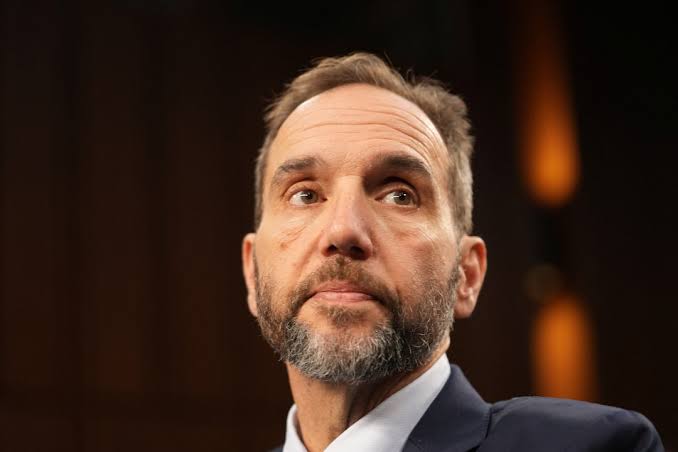

Jack Smith became a widely recognized name in American public life through his work as a federal prosecutor investigating former U.S. President Donald Trump. Known for his experience in complex criminal investigations, Smith spent years working on cases involving public corruption, international crimes, and alleged violations of federal law. His appointment as special counsel in November 2022 brought him into the center of a national debate about presidential accountability, the justice system, and the limits of executive power.
Smith’s career offers a closer look at the responsibilities of federal prosecutors and the challenges they face when investigating powerful political figures. His work attracted considerable public attention, legal scrutiny, and competing interpretations of the role of criminal investigations in American democracy.
Understanding his professional background, investigative approach, and most prominent cases helps explain why his name became so familiar to millions of Americans.
Who Is Jack Smith?
Jack Smith is an American attorney who built his career around criminal prosecution and public service. Before becoming a special counsel, he worked in several positions within the United States justice system, handling cases that ranged from domestic criminal offenses to international crimes.
Unlike elected prosecutors or politicians, Smith developed his public reputation primarily through legal work rather than campaigning or public appearances. His responsibilities required him to examine evidence, evaluate criminal allegations, work with investigators, and determine whether cases should proceed through the courts.
His appointment as special counsel placed him in a particularly sensitive position because the investigations involved a former president who remained an influential figure in American politics.
Although public discussion frequently focused on Smith personally, the investigations he supervised involved teams of attorneys, investigators, analysts, and other professionals. Federal criminal investigations are generally collaborative efforts, with decisions guided by evidence, applicable statutes, procedural rules, and constitutional requirements.
Early Career and Legal Experience
Smith began his prosecutorial career in 1994 as an assistant district attorney in Manhattan, New York. In 1999, he moved to the U.S. Attorney’s Office for the Eastern District of New York, where he handled a variety of criminal cases. His work included serious violent crimes, civil rights violations, and other complex matters.
These early assignments helped him develop experience in courtroom litigation, evidence assessment, and criminal investigations. Federal prosecutors often work with law enforcement agencies to build cases that can withstand legal challenges, and Smith’s career gradually expanded into more specialized areas of prosecution.
Work in International Criminal Investigations
From 2008 to 2010, Smith worked with the Office of the Prosecutor at the International Criminal Court in The Hague. His responsibilities involved supervising investigations connected to alleged international crimes.
This experience broadened his professional background beyond the American legal system. International criminal investigations can involve complicated questions of jurisdiction, witness protection, evidence collection, and cooperation between countries.
Smith later returned to the U.S. Department of Justice, where he became chief of the Public Integrity Section in 2010. The section handles certain cases involving public corruption and election-related offenses. He subsequently served in the U.S. Attorney’s Office for the Middle District of Tennessee before taking on another international prosecution role.
His professional background was one reason Attorney General Merrick Garland selected him to oversee investigations involving Trump in November 2022.
Appointment as Special Counsel
On November 18, 2022, Garland appointed Smith as special counsel to supervise two federal investigations involving Trump. The appointment came after Trump announced another presidential campaign, creating concerns about the appearance of political influence in investigations involving a former president and a potential presidential candidate.
A special counsel is appointed to handle a particular investigation with a degree of independence from the Justice Department’s ordinary leadership structure. However, the position does not exist outside the law or the department’s governing regulations.
Smith was authorized to investigate potential federal offenses connected to the transfer of presidential power following the 2020 election, as well as the retention of classified documents and possible obstruction of the related investigation.
His office operated under substantial public scrutiny from the beginning. Supporters of the investigations emphasized accountability under the law, while critics questioned the timing, scope, and political implications of the cases.
The 2020 Election Investigation
One of Smith’s central responsibilities involved investigating efforts to challenge the outcome of the 2020 presidential election and interfere with the certification of the electoral vote.
In August 2023, a federal grand jury in Washington, D.C., returned an indictment charging Trump with offenses related to alleged efforts to overturn the election result. The charges included conspiracy to defraud the United States, conspiracy to obstruct an official proceeding, obstruction of an official proceeding, and conspiracy against rights.
The indictment presented the prosecution’s allegations rather than a judicial finding of guilt. Trump denied wrongdoing and challenged the case through legal arguments and court proceedings.
The investigation raised significant constitutional questions about presidential conduct, the transfer of power, and the relationship between political activity and federal criminal law.
Smith’s team examined communications, public statements, interactions with officials, and events surrounding the January 6, 2021, attack on the U.S. Capitol. The prosecution argued that the alleged conduct went beyond ordinary political disagreement and involved unlawful efforts to interfere with the election process.
The case became a major part of the national conversation about presidential accountability. However, it did not reach a criminal trial against Trump before the prosecution was dismissed following his return to the presidency.
The Classified Documents Case
The second major investigation concerned classified government documents discovered at Mar-a-Lago, Trump’s Florida property, after his first presidential term ended.
Federal authorities investigated the retention of government records, the handling of classified materials, and whether efforts had been made to obstruct the investigation. In June 2023, a federal grand jury in Florida indicted Trump on charges connected to the documents.
The indictment also named two Trump employees, Walt Nauta and Carlos De Oliveira. Trump pleaded not guilty and disputed the prosecution’s allegations.
The case involved questions about the legal obligations surrounding classified records, the authority of federal investigators, and the responsibilities of former presidents in handling government information.
In July 2024, U.S. District Judge Aileen Cannon dismissed the case after finding that Smith’s appointment as special counsel violated the Constitution’s Appointments Clause. The Justice Department appealed that ruling, but the case did not proceed to trial against Trump.
The dismissal was based on the legal question of the special counsel’s appointment rather than a jury determination of the underlying allegations. This distinction is important when understanding the outcome.
Why the Cases Were Dismissed
Trump’s victory in the November 2024 presidential election changed the circumstances surrounding both federal cases.
The Justice Department has long maintained a position that a sitting president cannot be federally prosecuted while in office. Following Trump’s election, Smith’s team moved to dismiss the election-interference case without prejudice, meaning the dismissal did not constitute a determination of the merits of the allegations.
The classified-documents case was also dismissed against Trump. Smith subsequently resigned from the Justice Department in January 2025 after submitting his final report on the investigations.
These developments meant that neither federal prosecution resulted in a criminal conviction of Trump. The cases’ outcomes reflected a combination of legal rulings, constitutional questions, and Justice Department policy concerning a sitting president.
Jack Smith’s Public Image
Smith has maintained a relatively restrained public profile compared with many other figures involved in high-profile political controversies. His work has generally been associated with legal filings, courtroom proceedings, official statements, and congressional testimony rather than regular television appearances or political speeches.
His supporters have described his investigations as an effort to apply federal law without regard to political status. Critics, including Trump and several Republican lawmakers, have questioned whether the investigations were appropriately conducted and whether prosecutorial decisions were influenced by political considerations.
Those disagreements have shaped public perceptions of Smith. Some view his work through the lens of accountability and the rule of law, while others focus on concerns about prosecutorial authority, institutional independence, and the potential consequences of criminal investigations involving political opponents.
Evaluating these competing interpretations requires distinguishing documented court actions from political arguments about motive. Indictments describe allegations, judicial decisions resolve particular legal issues, and public statements reflect the positions of the people making them.
Congressional Testimony and Recent Developments
Smith’s work has continued to receive attention through congressional oversight and public discussion. His testimony and statements concerning the investigations have provided additional insight into the decisions made by his office.
Congressional hearings have included questions about investigative methods, subpoenas, communications, and allegations of prosecutorial bias. Smith has defended the work of his office and maintained that the investigations followed the evidence and applicable law.
Political disagreements over the investigations remain significant. Some lawmakers have defended the legitimacy of the cases, while others have criticized the way the investigations were conducted.
These exchanges demonstrate that the legal and political debates surrounding Smith’s work have continued beyond the dismissal of the federal cases. Congressional oversight can examine how federal investigations are conducted, although allegations raised during a hearing should not automatically be treated as established misconduct.
Personal Life and Privacy
Although public interest in Smith has grown considerably, relatively little verified information about his private life is widely discussed. His professional career has attracted far more attention than his family background, personal relationships, or everyday activities.
This limited public profile is consistent with his career as a prosecutor rather than an elected official or entertainment personality. Prosecutors generally become well known through the cases they handle, and their personal lives are not necessarily relevant to understanding their legal decisions.
For readers interested in his biography, his education, prosecutorial experience, and public service provide a clearer picture of his professional background than speculation about private matters.
The Legacy of Jack Smith’s Investigations
Smith’s career illustrates the complicated relationship between criminal prosecution, constitutional law, and political power in the United States. His investigations involved questions about election procedures, classified information, presidential authority, and the independence of federal law enforcement.
The cases also highlighted the practical limits prosecutors can face when constitutional issues, election outcomes, and institutional policies intersect. Even extensive investigations do not guarantee a trial, and an indictment alone does not establish guilt.
The lasting significance of Smith’s work will likely remain a subject of legal analysis and political debate. Court decisions, official records, congressional oversight, and future discussions about presidential accountability will continue to shape how these investigations are understood.
Jack Smith became an important figure in modern American legal history because of the responsibilities he held and the public attention surrounding his investigations. Understanding his career requires looking beyond political arguments and examining the legal processes, documented decisions, and unresolved questions that defined his work.
Frequently Asked Questions
Who Is Jack Smith?
Jack Smith is an American attorney and former federal prosecutor who served as special counsel investigating Donald Trump in two federal criminal cases involving the 2020 election and classified documents.
Why Did Jack Smith Investigate Donald Trump?
Smith was appointed to investigate potential federal crimes related to efforts to interfere with the transfer of presidential power following the 2020 election, as well as the retention of classified government documents and possible obstruction.
When Was Jack Smith Appointed Special Counsel?
Attorney General Merrick Garland appointed Smith on November 18, 2022, to oversee the two investigations.
What Happened to the Cases Against Donald Trump?
The classified-documents case was dismissed by a federal judge in July 2024 over the legality of Smith’s appointment. After Trump won the 2024 presidential election, the federal election-interference case was dismissed without prejudice, and the documents case was dismissed against Trump as well.
Is Jack Smith Still a Special Counsel?
No. Smith resigned from the Justice Department in January 2025 after completing his work as special counsel.
Why Is Jack Smith Still Discussed?
His investigations remain part of broader discussions about presidential accountability, federal prosecutorial authority, and the independence of the Justice Department. His legal work continues to receive attention because of the constitutional and institutional questions raised by the cases.
Conclusion
Jack Smith’s professional journey reflects decades of work in criminal prosecution, public integrity investigations, and international law. His appointment as special counsel placed him at the center of two consequential federal cases involving a former and later returning president.
Although neither case resulted in a criminal conviction of Trump, the investigations raised important questions about the presidency, the justice system, and the limits of prosecutorial authority. The legal and political debates surrounding those cases continue to influence discussions about federal law enforcement and presidential accountability.
Understanding Jack Smith means examining both his professional record and the legal circumstances surrounding his investigations. By separating established facts, court decisions, and competing political interpretations, readers can develop a clearer understanding of his role in one of the most closely watched legal chapters in recent American history.