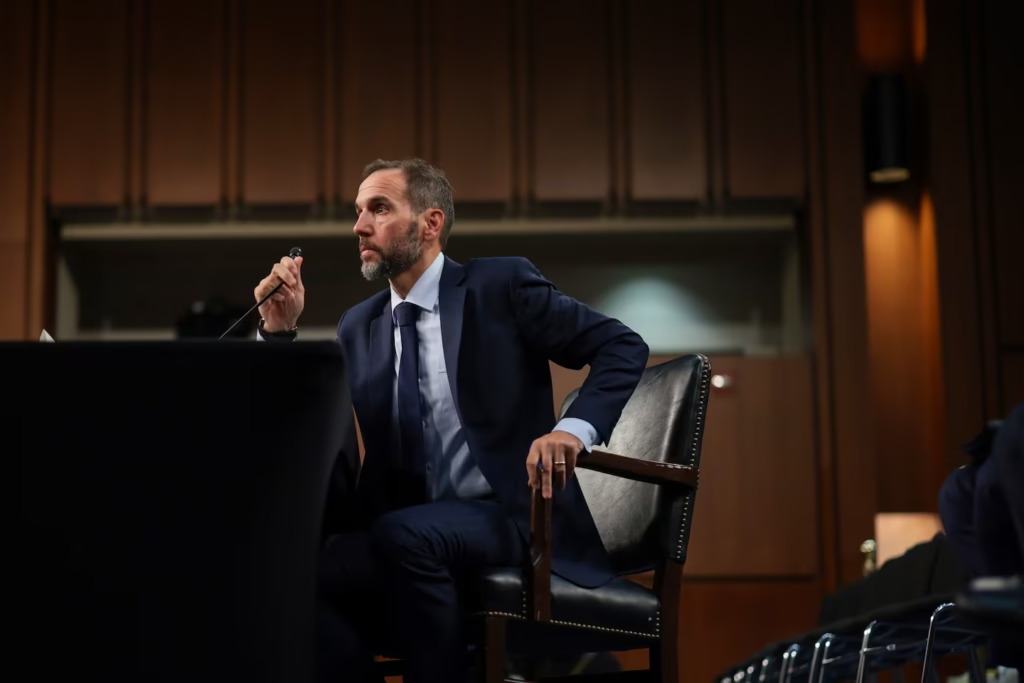

The Jack Smith hearing on September 29, 2026, brought former U.S. Special Counsel Jack Smith before the Senate Judiciary Committee for a closely watched examination of his investigations into Donald Trump. The hearing focused on Smith’s handling of the 2020 election investigation, subpoenas for lawmakers’ phone records, the collection of financial information, and questions surrounding his prosecution of Trump.
Smith defended the work of his former team and rejected accusations that the investigations were politically motivated. Republican senators questioned whether his office had gone too far in gathering information from lawmakers, journalists, donors and other individuals. The hearing also featured several heated exchanges, including a widely discussed dispute over Smith’s whereabouts at a basketball game in 2024.
Why the Jack Smith Hearing Matters
Smith became a central figure in the federal investigations involving Trump after Attorney General Merrick Garland appointed him special counsel in November 2022. His office investigated two major matters: Trump’s efforts to overturn the 2020 presidential election and Trump’s retention of classified government documents after leaving office.
The Justice Department’s archived records confirm Smith’s appointment and identify the investigations and prosecutions carried out by his office. The election case resulted in a four-count federal indictment, while the classified-documents case resulted in a 40-count indictment. Both federal cases were ultimately dismissed after Trump returned to the presidency and related legal circumstances changed.
The Senate hearing therefore became an opportunity for lawmakers to revisit decisions that had already generated significant legal and political controversy.
Smith Defends His Investigations
During the hearing, Smith repeatedly maintained that his decisions were based on evidence and investigative requirements rather than political considerations.
He told lawmakers that he accepted the special counsel position because of his background as a career prosecutor and said he would have approached the cases in the same manner regardless of whether the person under investigation was a Republican or a Democrat. His prepared remarks also stated that his investigation had developed evidence that, in his view, supported criminal charges against Trump.
Republican senators challenged that interpretation. Chairman Chuck Grassley and other Republicans argued that Smith’s investigation improperly reached into areas involving Republican lawmakers, political donors and media organizations. Those accusations are part of the Senate Republicans’ broader oversight of the investigation and were strongly disputed by Smith and Democratic members of the committee.
The Dispute Over Congressional Phone Records
One of the most important subjects during the Jack Smith hearing was the use of congressional phone records.
Smith explained that his investigators obtained toll records as part of the investigation into efforts to interfere with the certification of the 2020 election. Toll records generally identify information such as the parties involved in a call, its duration and related metadata rather than the actual conversation.
Smith said investigators believed the information could help establish connections between Trump, his allies and members of Congress during the period surrounding January 6, 2021. He also said his team consulted the Justice Department’s Public Integrity Section before pursuing the records.
Republican senators questioned whether obtaining such records crossed constitutional or institutional boundaries. Grassley has also pointed to additional records obtained during the investigation, including information involving lawmakers and political donors. His committee has continued to investigate how those records were collected and used.
The distinction between call metadata and message content became particularly important during the questioning. Smith said his team did not wiretap members of Congress and emphasized that the phone records at issue in his explanation were non-content records. Separately, later Justice Department disclosures have raised questions about text-message material obtained from the National Archives that involved communications connected to lawmakers.
Republican Senators Raise Abuse-of-Authority Claims
Republican members of the committee used the hearing to argue that Smith’s office exceeded appropriate investigative boundaries.
Grassley questioned Smith about financial information obtained during the investigation, including donor records. According to Grassley’s committee, investigators obtained thousands of checks and other financial information connected to Republican donors. Smith acknowledged that his team obtained financial information but said subpoenas were issued as part of a criminal investigation.
Republican senators also questioned the handling of journalist communications and other investigative records. Their argument was that collecting such information demonstrated excessive government power.
These allegations remain matters of political and congressional dispute. The Senate Judiciary Committee is conducting oversight of the investigation, while Smith has defended the investigative decisions and rejected the suggestion that political affiliation determined whom his team investigated.
A Controversial Basketball Exchange
One of the most unusual moments of the hearing involved a disagreement about a basketball game.
Senator Eric Schmitt questioned Smith about whether he had attended an Atlanta Hawks game in February 2024. Schmitt appeared to connect the alleged attendance with a broader theory involving Georgia prosecutor Fani Willis.
Smith denied that he had attended an Atlanta Hawks game or traveled to Atlanta for such a meeting. He explained that he had instead attended a University of Iowa women’s basketball game against Maryland in College Park, Maryland. The Iowa team is known as the Hawkeyes, while Atlanta’s NBA team is the Hawks.
The exchange quickly attracted attention because Schmitt appeared to have confused the two teams. The incident became one of the most widely discussed moments from the hearing, although it was separate from the central legal questions surrounding Smith’s investigations.
Questions About the Classified-Documents Investigation
The classified-documents investigation was another important part of Smith’s broader record, although his ability to discuss certain details publicly remains limited.
Smith’s team investigated Trump’s retention of classified documents at Mar-a-Lago and alleged obstruction of the federal investigation. The second volume of Smith’s final report concerning that investigation has faced separate legal restrictions, limiting public discussion of its contents.
This limitation is significant because the Senate hearing dealt extensively with Smith’s conduct, yet some of the underlying material cannot simply be discussed in full by the former special counsel.
The Justice Department has publicly preserved Volume One of Smith’s final report, which dealt with the election case. The report was submitted in January 2025 and described the investigation and the legal basis for the charges.
The Earlier House Hearing
The September Senate appearance was not Smith’s first congressional testimony in 2026.
In January, Smith appeared publicly before the House Judiciary Committee after an earlier closed-door session. The House hearing examined the operations of his special counsel office and its investigations and prosecutions involving Trump. Official House records list Smith as the sole witness and include both his oral and prepared testimony.
That earlier hearing established many of the themes that returned in the Senate: the legality of the investigations, the use of subpoenas, the treatment of evidence, and whether Smith’s prosecution decisions were influenced by politics.
The repeated congressional scrutiny reflects the continuing disagreement over how federal investigative authority should be used when a former or current president is involved.
What Smith Said About His Former Colleagues
Another personal element emerged during the Jack Smith hearing when Smith discussed the consequences faced by people who worked with him.
Smith said he regretted that members of his former investigative team had been fired and publicly criticized. He also argued that the prosecutors involved in the investigations had carried out their responsibilities under Justice Department rules.
His comments highlighted a broader issue surrounding special counsels: prosecutors can become highly visible public figures when investigations involve presidents, but their work remains governed by legal standards, departmental policies and court procedures.
What Comes Next After the Hearing?
The Senate hearing does not itself determine whether Smith or members of his former team violated the law. Congressional hearings can gather testimony, examine government actions and generate material for further oversight, but allegations raised during questioning are not automatically legal findings.
The Senate Judiciary Committee has indicated that its scrutiny of Smith’s work forms part of a broader oversight effort. Republicans have continued to investigate the collection of phone, financial and other records, while Democrats have argued that the scrutiny is being used to revisit investigations they consider legally justified.
The competing interpretations mean that the documentary record, court decisions and official investigations will remain important for understanding what actually occurred.
Frequently Asked Questions
Who is Jack Smith?
Jack Smith is a former federal prosecutor who served as special counsel at the U.S. Department of Justice beginning in November 2022. He was appointed by Attorney General Merrick Garland to investigate matters involving Donald Trump, including efforts to overturn the 2020 election and the retention of classified documents.
When was the latest Jack Smith hearing?
The latest major congressional appearance discussed here took place on September 29, 2026, before the Senate Judiciary Committee. The official committee record identifies the session as an oversight hearing concerning Smith’s authority and the targeting of Republicans and related matters.
What was the main issue at the hearing?
The hearing covered several subjects, including Smith’s investigations of Trump, congressional phone records, financial information, journalist communications, investigative subpoenas and allegations that his office acted politically. Smith rejected the claim that his work was politically motivated.
Did Smith admit to obtaining financial information?
Yes. Smith acknowledged during questioning that his investigative team obtained financial information. He explained that subpoenas were used as part of a criminal investigation, while Republican senators questioned whether the collection was justified.
Why was the basketball incident discussed?
Senator Eric Schmitt questioned Smith about an alleged Atlanta Hawks game appearance. Smith said he had attended an Iowa women’s basketball game in Maryland instead. The exchange attracted attention after the two teams were apparently confused during the questioning.
Conclusion
The Jack Smith hearing offered another detailed look at the disputes surrounding the former special counsel’s investigations of Donald Trump. Smith defended his decisions as evidence-based and consistent with his responsibilities as a federal prosecutor, while Republican senators continued to question the scope and methods of his investigation.
The hearing also demonstrated why the subject remains complicated. Some matters involve established court records and official Justice Department documents, while others involve competing interpretations of investigative decisions and congressional oversight. Understanding that distinction is essential when evaluating the claims made during a highly contentious hearing.
As congressional scrutiny continues, the most important record will remain the underlying evidence, official documents, court rulings and testimony rather than the most dramatic exchanges. For readers following the Jack Smith hearing, those primary materials provide the clearest way to understand what was alleged, what was acknowledged and what remains disputed.