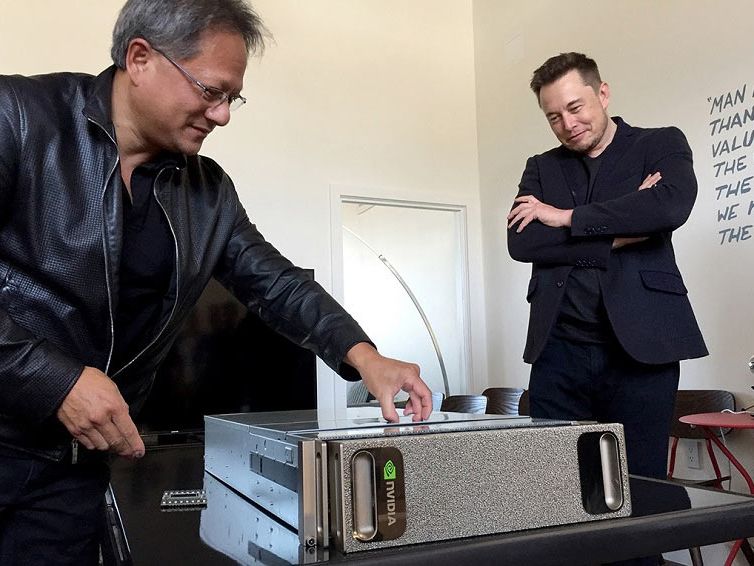

Jensen Huang and Elon Musk are two of the most influential figures in modern technology. Huang, the co-founder and chief executive of NVIDIA, has helped transform graphics processors into essential tools for artificial intelligence (AI). Musk, the entrepreneur behind Tesla, SpaceX, and xAI, is pursuing ambitious goals involving electric vehicles, space exploration, robotics, and advanced AI systems.
Although their careers follow different paths, both leaders share a belief that powerful technologies can reshape society. Their work increasingly intersects in artificial intelligence, computing infrastructure, robotics, and autonomous machines. Understanding their similarities and differences offers a fascinating look at where technology may be heading.
Who Is Jensen Huang?
Jensen Huang co-founded NVIDIA in 1993 and has led the company through its transformation from a graphics-chip manufacturer into a major provider of computing technology. Born in Taiwan in 1963, Huang moved to the United States during his childhood and later studied electrical engineering.
NVIDIA initially became widely known for graphics processing units, or GPUs, which made computer graphics and gaming more sophisticated. Over time, these processors also proved exceptionally useful for handling the parallel calculations required by machine learning.
That development placed NVIDIA at the center of the modern AI boom. Its GPUs, networking products, and software platforms are used by researchers, technology companies, and cloud-computing providers to develop and operate advanced AI models.
Huang’s leadership is characterized by long-term investment in computing infrastructure and an emphasis on building complete technology platforms rather than selling individual components alone.
Who Is Elon Musk?
Elon Musk is a technology entrepreneur known for founding and leading companies that pursue ambitious engineering projects. He has played major roles in Tesla, SpaceX, Neuralink, The Boring Company, and xAI, although his responsibilities and ownership interests differ across these businesses.
Tesla helped accelerate the adoption of electric vehicles and has invested heavily in battery technology, charging infrastructure, automated driving systems, and robotics. SpaceX has changed the commercial space industry through reusable rockets and the development of its Starship launch system.
Musk entered the AI industry through xAI, the company behind the Grok family of AI models. His interest in artificial intelligence extends beyond conversational systems to the computing infrastructure, data centers, and automated machines needed to support future applications.
His approach often emphasizes rapid engineering, large-scale investment, and ambitious deadlines. Supporters see this as a way to accelerate innovation, while critics sometimes question the feasibility of his timelines and the risks associated with his projects.
Jensen Huang and Elon Musk: Their Connection
The relationship between Jensen Huang and Elon Musk reflects the growing interdependence of hardware manufacturers and companies developing advanced AI systems.
NVIDIA supplies computing technology that can support the training and operation of AI models. Companies associated with Musk, including xAI and Tesla, have pursued computing infrastructure for their own AI and autonomy projects. This creates a natural connection between NVIDIA’s products and Musk’s technological ambitions.
However, their relationship should not be understood simply as a personal friendship or a permanent business partnership. Commercial relationships can change according to product requirements, supply agreements, investment decisions, and the availability of competing technologies.
The broader connection is more important than any single announcement. AI companies need powerful chips and reliable infrastructure, while semiconductor companies depend on demand from organizations building increasingly sophisticated computing systems.
Their respective ambitions illustrate how the AI industry brings together hardware, software, energy, data, and physical engineering.
Their Shared Interest in Artificial Intelligence
Artificial intelligence is the clearest area in which Huang’s and Musk’s interests overlap.
Huang has positioned NVIDIA as a foundational supplier for AI development. Its processors accelerate the calculations needed to train models, analyze enormous datasets, and generate responses. Its software ecosystem also helps developers build applications across industries.
Musk, meanwhile, has invested in AI through xAI and has promoted the development of systems that can reason, understand information, and assist with complex tasks. Tesla also develops AI technologies for driver-assistance features, autonomous-driving research, and robotics.
Despite this common interest, their roles are different. Huang primarily leads a company that builds the computing infrastructure used by a wide range of AI developers. Musk leads businesses that develop AI models and apply AI to particular products and services.
This distinction matters because success in artificial intelligence depends on more than creating an impressive model. Developers also need computing capacity, electricity, networking, specialized software, and practical ways to deliver their products to customers.
NVIDIA and xAI
NVIDIA’s technology is relevant to xAI because training large AI models requires substantial computing power. GPUs can perform many calculations simultaneously, making them well suited to deep learning and other demanding workloads.
xAI has invested in large-scale computing infrastructure to support its Grok models. Such facilities require more than processors alone. They also need advanced cooling, high-speed networking, reliable electricity, and systems that can operate efficiently at scale.
The relationship between AI developers and semiconductor suppliers is therefore both technical and commercial. NVIDIA benefits when organizations expand their computing capacity, while AI developers need hardware capable of supporting their training and inference workloads.
Nevertheless, the presence of NVIDIA technology in an AI ecosystem does not automatically establish an exclusive partnership. Specific purchasing arrangements, future supply commitments, and contractual terms should be distinguished from general industry connections.
Tesla, Robotics, and NVIDIA
Tesla’s interest in AI extends beyond electric cars. The company has worked on automated driving technology and humanoid robotics, including its Optimus project.
These applications require systems that can interpret visual information, recognize objects, predict movement, and respond to changing environments. Training such systems can demand significant computing resources, while deploying them in vehicles and robots requires efficient hardware and carefully engineered software.
NVIDIA develops platforms for robotics, simulation, and AI computing that can support work across these fields. Its technology is part of a broader ecosystem serving manufacturers, researchers, and developers.
Still, Tesla develops its own computing hardware and software for particular applications. Its technological strategy should not be confused with simply adopting every NVIDIA product.
The larger lesson is that AI is moving beyond digital assistants and into the physical world. Cars, industrial machines, and robots may increasingly use AI to perceive their surroundings and perform complex tasks, although the reliability and safety of these systems remain important challenges.
Leadership Styles and Business Strategies
Jensen Huang and Elon Musk share a willingness to pursue major technological changes, but their business strategies reflect different priorities.
Huang has concentrated on building NVIDIA’s position across chips, systems, networking, and software. This integrated approach allows the company to serve many customers rather than depend entirely on a single application or industry.
Musk’s businesses are more visibly focused on specific products and missions, including electric transportation, reusable rockets, satellite communications, and AI-powered systems. His companies often attempt to control important parts of their production and technology development.
Both approaches can produce advantages. NVIDIA’s broad customer base exposes it to demand from many sectors, while Musk’s vertically integrated businesses can coordinate hardware and software around particular goals.
Both also face significant risks. Semiconductor companies must manage manufacturing constraints, competition, and rapidly changing customer needs. Musk’s businesses must navigate capital requirements, technical challenges, regulatory scrutiny, and ambitious development schedules.
Their careers demonstrate that innovation requires not only bold ideas but also execution, financial discipline, and the ability to adapt when circumstances change.
Competition and Collaboration
The technology industry often combines competition with cooperation. Companies may compete for customers while depending on the same suppliers, manufacturing partners, and research ecosystems.
This dynamic also shapes the wider story of Jensen Huang and Elon Musk. NVIDIA competes with other chip designers and develops platforms that customers can use for different purposes. Musk’s companies must decide which technologies to purchase, develop internally, or obtain through outside partnerships.
AI infrastructure is particularly competitive because computing capacity can influence how quickly a company develops new products. Access to powerful processors, sufficient electricity, and efficient data centers can become important advantages.
At the same time, neither leader can independently control the entire AI ecosystem. Semiconductor manufacturing, advanced packaging, software development, energy infrastructure, and scientific research involve many organizations around the world.
Their success therefore depends partly on how effectively their companies work within this larger network.
The Future of AI
The future of artificial intelligence will likely involve more than chatbots and digital assistants. AI could become increasingly important in scientific research, manufacturing, healthcare, transportation, and industrial automation.
Huang’s vision emphasizes accelerated computing and AI infrastructure that enables developers to create new applications. Musk’s ambitions include more capable AI systems, autonomous transportation, and robots designed to perform tasks in the physical world.
These goals depend on continued improvements in computing performance, energy efficiency, model capabilities, and system reliability. Progress will also require careful attention to privacy, cybersecurity, safety, and the social consequences of automation.
Neither executive can guarantee how quickly these developments will occur. Technical limitations, economic conditions, regulation, and public acceptance will all influence the outcome.
Nevertheless, their work highlights a significant shift: AI is becoming an essential part of the infrastructure used to build future products and services.
Frequently Asked Questions
Are Jensen Huang and Elon Musk business partners?
They operate in overlapping technology markets, particularly AI computing and infrastructure. However, a general connection between their companies does not establish an exclusive partnership. Specific business arrangements should be evaluated using confirmed announcements.
What does Jensen Huang’s company do?
NVIDIA designs GPUs, AI computing platforms, networking products, and related software. Its technology supports applications ranging from gaming and scientific computing to large-scale AI development.
What AI company is owned by Elon Musk?
Musk founded xAI, which develops the Grok family of AI models. His other businesses, especially Tesla, also invest in AI-related technologies for applications such as automated driving and robotics.
Does Tesla use NVIDIA chips?
Tesla has used NVIDIA computing technology in various contexts, including earlier generations of its autonomous-driving hardware. However, Tesla has also developed its own AI chips. The hardware used depends on the application and generation of the system.
Why are Jensen Huang and Elon Musk important to AI?
Huang leads a company that supplies much of the computing infrastructure used in AI development. Musk leads companies that pursue AI applications across digital services, transportation, and robotics. Their work represents different but interconnected parts of the technology ecosystem.
Conclusion
Jensen Huang and Elon Musk represent two influential approaches to technological innovation. Huang has helped make NVIDIA a central supplier of the computing systems powering modern artificial intelligence, while Musk has pursued ambitious applications of AI across transportation, robotics, and digital products.
Their industries overlap because advanced AI requires both powerful computing infrastructure and practical applications. Yet their relationship is best understood through their respective business activities rather than assumptions about personal ties or exclusive partnerships.
As AI continues to develop, the decisions made by semiconductor companies, model developers, and manufacturers will help shape how the technology is used. The story of Jensen Huang and Elon Musk ultimately illustrates how different areas of expertise can contribute to the same technological transformation, even when their companies pursue distinct goals.