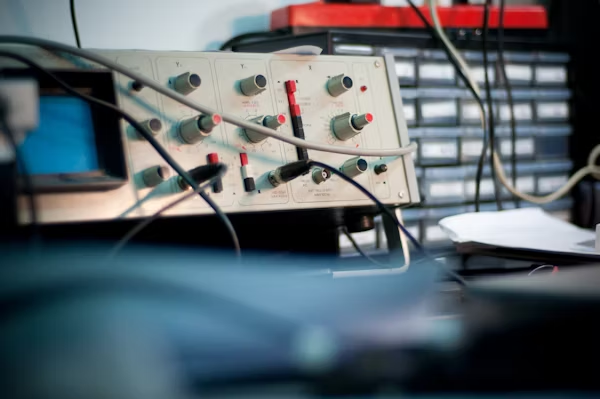

Electrical panels manage and control the power for any industrial and commercial facilities. These panels do have sensitive components such as circuit breakers, relays, transformers and PLCs (Programmable Logic Controllers) that need to be protected from overheating. Without any proper and the right type of thermal management, any form of excess heat could lead to a decline in performance, as well as an increase in any form of component malfunction and catastrophic failure. This is why thermal management techniques need to be incorporated into power system panels. One of the most effective techniques to dissipate heat is fan systems. Knowing fan mechanics and how to best integrate into panel design is needed for reliable electrical systems.
The Importance of Thermal Management in Electrical Panels
Like any element of technology, electrical panels will sustain a certain amount of wear and tear – especially in industrial environments with extreme temperature variations. Failure to address the enclosure within a panel may result in the following consequences:
Malfunction of fragile instruments
Increased chance of breakdown of the
Devoted lifespan of the electronic systems
Inability to schedule maintenance on systems
Thermal management systems keep overheating within safe limits, and therefore, effectively work on mitigating risks associated with loss of a panel. A panel may be thermally managed through careful choice of panel enclosure materials, spacing, enclosure ventilation, and in certain cases the installation of ventilators and fans. For thermal management, especially in B2B industries, loss of panel is a strategic overhead.
Thermal Management of Panels, and the Function of a Fan
In electrical panels, airflow management systems that include fans are among the best marketed and engineered solutions for cooling systems. To answer the question “how does a fan work,” it is important to understand that all fans generate airflow by converting electrical energy into mechanical energy. They also intake air, which is then cooled, which helps in cooling critical components. The cooled air is then expelled through the panel. The fans which suck in air are positioned as the intake fans and those pushing air out are the exhaust fans. This helps in preventing critical temperature hotspots which helps the electronic components work within their ideal temperature range.There are two types of fans, these are, axial and centrifugal:
Axial fans, which are designed for low pressure environments, and need open airflow, linearly move air.
Centrifugal fans work in high pressure environments, where airflow is restricted, these environments include, densely packed panels or panels with filters.
Most advanced. Putting the panel and the fan at the right position optimizes the cooling.
Standards and Guidelines in the Electrical Panel Design for Thermoregulation.
Placement of the Components
To achieve cooling, the fans must be placed at the right locations. This can be achieved through the positioning of components. High heat generating components, for example, transformers or power supplies, work better at locations with strong air flow, for example near exhaust or intake fans. This positioning balances airflow and separates low-heat components and high-heat components.
The Importance of the Strategic Integration of Fans
The positioning of the fans in the system is critical. Depending on the size and shape of the control panel, it may be possible to use one intake and one exhaust fan and still maintain a constant airflow. Also, real-time temperature measurements and effective fan integration make it possible to control temperature without wasting energy. As fans increase outputs, flexible fans maintain the cooling and effective temperature control is achieved.
Utilizing Ventilation Panels and Openings
Ventilation panels and openings performed passive exhaust. They work with fans to increase the effectiveness of airflow. Perforated panels and louvers may provide passive airflow and still control contamination more than active exhaust vents. For high-density passive exhaust ventilation panels, fans will not be able to maintain sufficient airflow, cooling demand will be lowered and airflow will be uniform.
Temperature and Environment Monitoring
The control panel is surrounded by temperature sensors and active monitoring systems. They collect real-time data on internal conditions and can automatically issue alerts to control passive thermals. Other boundary conditions, like humidity, are equally important to monitor because excess moisture can cause short circuits, degrading the electrical circuits.
The placement of the cooling parts
The function of electric fans requires them to be cleaned and maintained on a regular basis. Dust on the fans, circuit breakers, and other cooling devices should be within easy reach. Neglected fans and fanned circuit breakers lose their mechanical parts, and their airflows become blocked. All of these lead to a drop in the efficacy within the thermal management system and, as a result, the fans, too.
Thermal Management in Electric panels
The proper management of thermal temperatures within electric panels sets them up for success in both industry and trade.
Enhanced Electronic Lifespan: Systems with high levels of stress and heat maintain their Electronic Lifespan when thermal Management cooling systems are present.
Minimized System Failure: Automatic downtimes are mitigated as overheating is controlled along with system failures.
Reduction of Energy: Chaotic energy use is minimized with the use of a combination of passive and active cooling systems along with variable speed fans.
Increased Safety: Uncontrolled thermal temperatures can result in fires, so monitoring them decreases safety risks.
Enhanced Functionality: Electronics lose reliability and effectiveness when operated outside a designated temperature range
Further Thermal Management Techniques All these methods of thermal temperature management are greatly focused on critical/high-density areas: Airflow Baffles: These assist in cooling by guiding airflow towards areas concentrating hot levels of heat. Heat Exchangers: these efficiently transfer the heat from the inner panel of the Unit to the surrounding environment. Thermal modeling: using dedicated software these predict the compact fans which are used to reduce the heat buildup, to place iteratively to minimize heat. Zoned cooling: segment the panel into thermal zones with each zone containing dedicated fans or other strategies of pinpointed cooling. Deployment of such methods addresses the problems of the electric panels and ensures safe operation, efficiently under large loads and extreme environmental conditions. Conclusion A focal point on how the electric panel is designed needs to be to manage efficiently all the heat that is generated. Overheating can negatively affect the equipment within the panel, and in turn, greatly reduce the provided reliability panel, resulting in expensive downtimes. Familiarity with the integration of the fan and knowing how it works ensures that there is effective heat removal and stabilization during operation.
The adoption of cooling efficiencies of equipment, such as component placement, fan integration, ventilation design, the surrounding area, servicing, and the servicing of equipment, helps the operators improve the system performance, the equipment life, and cooling efficiencies. The continuous use of electricity in the B2B sectors does not afford to forget thermal management. Comprehensive thermal management is vital to the performance of the operational activities without interruptions.