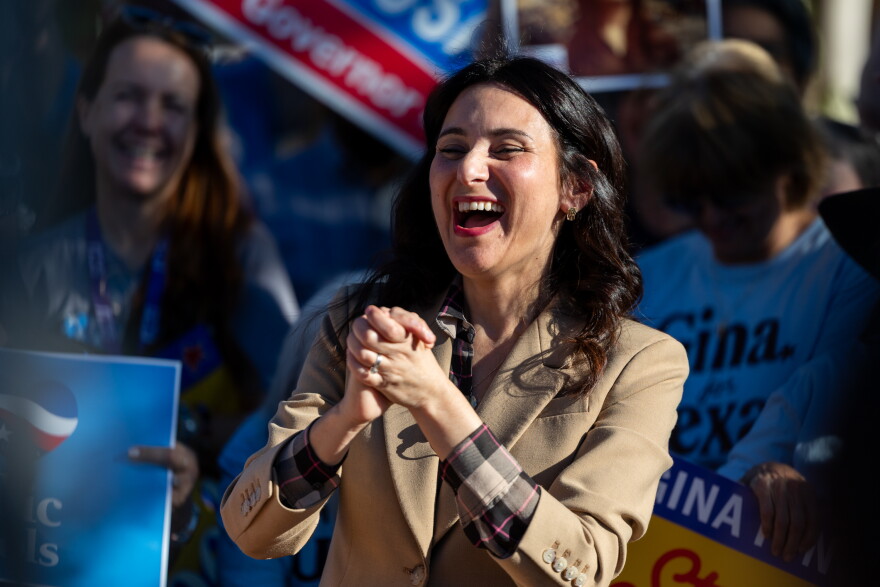

The Texas governor polls have attracted considerable attention as voters prepare to decide who will lead the Lone Star State for the next four years. The 2026 gubernatorial contest has become an important political story, with Republican incumbent Greg Abbott facing Democratic challenger Gina Hinojosa. Recent surveys suggest a competitive race, although Abbott continues to hold a narrow advantage in several polling averages.
With Election Day arriving on November 3, 2026, voters are paying close attention to the candidates, their policies, and the issues shaping public opinion. The latest polling numbers offer an interesting picture of a state where political loyalties remain strong but the outcome is attracting more attention than many expected.
The 2026 Texas Governor Race
Texas has traditionally been a Republican stronghold in statewide elections. However, the 2026 gubernatorial contest has generated considerable interest because Democrats are hoping to make meaningful progress against an established Republican incumbent.
Greg Abbott, who has served as governor since 2015, is seeking another term. His political experience, established statewide organization, and strong support among Republican voters give him important advantages.
His Democratic opponent, Gina Hinojosa, is a Texas state representative who has built her campaign around changing the direction of state leadership. Her candidacy has brought renewed attention to issues including public education, healthcare, affordability, and government accountability.
The presence of Libertarian candidate Pat Dixon also gives voters another option, although most polling attention remains focused on the contest between Abbott and Hinojosa.
What the Latest Polls Reveal
The latest Texas governor polls show a competitive contest, with different surveys producing slightly different results. Some give Abbott a small lead, while others suggest Hinojosa has managed to move ahead within the margin of error.
A New York Times and Siena University survey conducted from October 27 through November 1 placed Hinojosa at approximately 48 percent and Abbott at 47 percent among likely voters. This result indicated a narrow Democratic advantage rather than a decisive lead.
Other surveys have shown a different picture. YouGov’s late-October polling placed Abbott at 50 percent and Hinojosa at 49 percent. Research Co. also reported a narrow Republican advantage in its final pre-election survey.
These differences demonstrate why individual polls should not be treated as predictions of the final result. Each survey uses its own sample, methodology, and weighting system.
Greg Abbott’s Position in the Race
Greg Abbott enters the election with the advantages of incumbency and considerable political experience. Since becoming governor in 2015, he has developed a recognizable political profile throughout Texas.
His campaign has emphasized border security, economic development, public safety, conservative policies, and opposition to federal government intervention in state affairs.
Abbott’s supporters often point to Texas’s business environment, job creation, and investment opportunities as reasons to continue his administration. His established relationships with Republican voters also provide an important foundation for his campaign.
However, incumbency does not guarantee victory. Questions about public services, immigration policy, education, and the overall direction of state government remain important considerations for voters.
Gina Hinojosa’s Campaign and Growing Attention
Gina Hinojosa has presented herself as an alternative to Abbott’s leadership. Her background in the Texas Legislature gives her experience with state-level policymaking and legislative debates.
Her campaign has focused on concerns that directly affect households, including the cost of living, access to healthcare, public education, and the quality of government services.
For Democratic voters, the campaign represents an opportunity to challenge Republican control of the governor’s office. Hinojosa also needs to appeal to independent voters and Texans who may not regularly support Democratic candidates.
Her performance in recent surveys suggests that the race deserves attention. Nevertheless, a narrow polling lead does not establish that a candidate will win, particularly in a state with a long history of Republican statewide victories.
Key Issues Influencing Voters
The election is not simply a contest between two political personalities. It also reflects different opinions about the future of Texas and the priorities of its residents.
The economy and affordability are major concerns. Housing expenses, electricity bills, property taxes, and everyday costs influence how voters evaluate state leadership. Both candidates have discussed affordability, but their proposed approaches differ.
Education is another important subject. Abbott has supported school choice and education reforms, while Hinojosa has emphasized public school funding, teacher compensation, and changes to the state’s education system.
Border security and immigration remain central political issues in Texas. Abbott has made border enforcement a major part of his administration and campaign. Hinojosa has offered a different perspective on state priorities and government accountability.
Healthcare and public services also matter to families across the state. Access to affordable medical care, school quality, and the availability of essential services could influence voters who remain undecided.
Why Polling Numbers Differ
Understanding polling requires more than looking at which candidate has the highest percentage. The methodology behind each survey can significantly influence its results.
Some pollsters interview registered voters, while others concentrate on likely voters. The distinction matters because not everyone who is registered will participate in an election.
Sample size is another important factor. A survey involving 2,000 respondents generally provides a different level of statistical precision from one involving 400 respondents, although sample size alone does not determine accuracy.
The margin of error also deserves attention. If a poll gives Abbott 49 percent and Hinojosa 48 percent with a margin of error of approximately three percentage points, the result does not establish a clear advantage.
This is why analysts examine several surveys instead of relying on one headline.
What Polling Averages Suggest
Polling averages offer a broader picture by combining multiple surveys. However, different organizations use different methods to select, weight, and evaluate the polls included in their calculations.
Several late-election trackers have shown Abbott maintaining a small overall advantage. For example, some averages place him approximately two to three percentage points ahead, while other compilations show a closer contest.
The University of Texas at Austin’s Texas Politics Project has also maintained a public tracker containing surveys from organizations including Siena, YouGov, Fox News, Emerson College, and CNN/SSRS.
The overall message is straightforward: Abbott has remained competitive, but Hinojosa has demonstrated the ability to challenge him in individual surveys.
The Importance of Voter Turnout
Polling can indicate public preferences, but actual election results depend on participation.
Texas has a large and geographically diverse electorate. Voting patterns in metropolitan areas, smaller communities, suburban neighborhoods, and rural counties can produce very different political outcomes.
Democratic campaigns generally need strong participation in major urban areas and improved support among suburban and independent voters. Republicans, meanwhile, seek to maintain their traditional strength in rural communities and conservative regions.
Early voting is another important part of the picture. The number of people who vote before Election Day can provide useful information about participation, although early voting totals do not automatically indicate which candidate is ahead.
Ultimately, the ability of each campaign to motivate its supporters will be one of the most important factors in determining the result.
What Happens on Election Day?
November 3, 2026, is the scheduled general election date for the Texas governor’s race. Voters will choose between the candidates listed on the official ballot, including Abbott, Hinojosa, and Libertarian Pat Dixon.
Once voting ends, election officials will begin reporting results from individual counties. The first reported figures may not represent the entire electorate because different counties process and report ballots at different times.
If the candidates finish close together, the final outcome may take longer to become clear. Mail ballots, outstanding precinct results, and the official canvassing process all play a role in determining the certified result.
For this reason, early election-night figures should be treated carefully rather than considered the final outcome.
Frequently Asked Questions
Who is leading the Texas governor polls in 2026?
Greg Abbott has maintained a narrow advantage in several polling averages. However, some recent surveys have placed Gina Hinojosa slightly ahead, making the contest competitive.
Who is running against Greg Abbott?
Democratic state representative Gina Hinojosa is Abbott’s principal opponent in the 2026 general election. Libertarian candidate Pat Dixon is also running for governor.
When is the Texas governor election?
The general election is scheduled for November 3, 2026.
Can Gina Hinojosa defeat Greg Abbott?
It is possible, but polling alone cannot determine the winner. Hinojosa needs strong voter participation and support across different regions, while Abbott benefits from incumbency and an established Republican voter base.
Why do different polls show different results?
Polls use different sample sizes, survey methods, voter groups, and statistical adjustments. These differences can produce varying results even when surveys are conducted around the same time.
Are the Texas governor polls accurate?
Polls are useful tools for understanding voter preferences, but they are not guarantees of election results. Sampling errors, turnout patterns, undecided voters, and changes in public opinion can affect their accuracy.
Conclusion
The Texas governor polls have highlighted an unusually competitive political contest between Republican incumbent Greg Abbott and Democratic challenger Gina Hinojosa. Although several polling averages continue to show Abbott with a modest advantage, individual surveys demonstrate that Hinojosa has remained within striking distance.
The outcome will depend on more than polling percentages. Voter turnout, regional support, campaign priorities, and the issues that matter most to Texans will all influence the final result.
As Texas heads into its November 3 election, the race represents an important moment for the state’s political future. The most reliable way to understand the contest is to follow multiple credible surveys, consider their methodology, and distinguish polling estimates from actual election results.