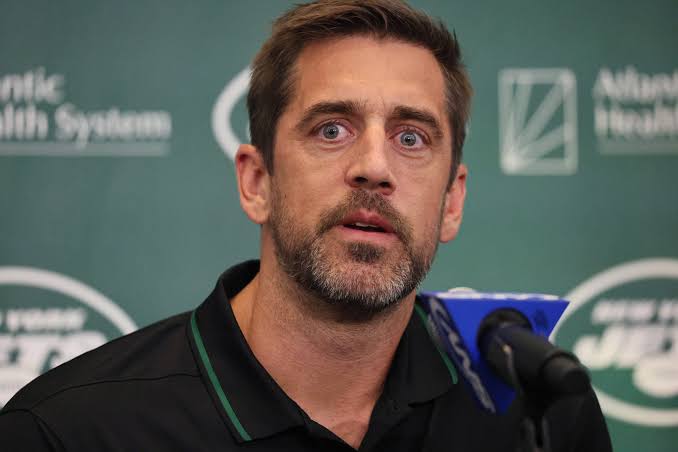

The Aaron Rodgers Mount Rushmore debate has become a fascinating topic among American football fans. With four NFL Most Valuable Player awards, a Super Bowl championship, remarkable passing accuracy, and an impressive professional career, Rodgers has established himself as one of the finest quarterbacks in football history.
However, does his career deserve recognition alongside legends such as Tom Brady, Peyton Manning, and Joe Montana? From his early struggles to his unforgettable performances on the biggest stage, Rodgers has built a legacy that goes beyond statistics. Understanding his journey helps explain why his name remains central to conversations about football’s greatest players.
What Does Aaron Rodgers Mount Mean?
The phrase Aaron Rodgers Mount generally refers to discussions about whether the quarterback deserves a place on the NFL’s symbolic Mount Rushmore. In sports, Mount Rushmore represents four exceptional individuals whose achievements, talent, and influence define a particular game or position.
There is no official NFL Mount Rushmore ranking. Instead, fans, former players, and sports analysts create their own selections based on different criteria. While some value Super Bowl victories above everything else, others focus on individual talent, consistency, leadership, and career achievements. Rodgers has a particularly strong case when individual performance is considered.
Early Life and Background
Aaron Charles Rodgers was born on December 2, 1983, in Chico, California, United States. Growing up, he developed a strong interest in football and displayed impressive athletic abilities. He attended Pleasant Valley High School, where his performances demonstrated his potential as a future professional quarterback.
Despite his talent, Rodgers did not receive significant attention from major college football programs. He began his college career at Butte College before transferring to the University of California, Berkeley. His outstanding performances eventually attracted NFL scouts, proving that an unconventional beginning does not prevent someone from achieving greatness. California Golden Bears Athletics+1
Journey to the NFL
Rodgers entered the 2005 NFL Draft with high expectations. However, several teams passed on the young quarterback before the Green Bay Packers selected him with the 24th overall pick. What appeared to be a disappointing experience eventually became the beginning of an extraordinary professional journey.
He spent his first three seasons as a backup to legendary quarterback Brett Favre. In 2008, Rodgers became Green Bay’s starting quarterback and began building his own identity. His ability to remain composed under pressure, deliver accurate passes, and read defensive formations quickly established him as an exceptional player.
Rise to Football Stardom
Rodgers became one of the most recognizable faces in American football during his years with Green Bay. His combination of arm strength, intelligent decision-making, mobility, and passing precision made him particularly difficult for opposing defenses to handle.
His remarkable performances earned him the NFL Most Valuable Player award in 2011, 2014, 2020, and 2021. Winning four MVP awards across different stages of his career demonstrated both his exceptional talent and longevity. He continued performing at an elite level long after many quarterbacks typically experience a decline. static.clubs.nfl.com+1
Super Bowl Success
One of the defining moments of Rodgers’ career arrived on February 6, 2011, when the Green Bay Packers defeated the Pittsburgh Steelers 31–25 in Super Bowl XLV. Rodgers delivered an outstanding performance, recording 304 passing yards and three touchdowns without throwing an interception.
He received the Super Bowl MVP award, establishing himself as a quarterback capable of succeeding under enormous pressure. Although he has not collected multiple championships like some other football legends, his Super Bowl performance remains an important part of his historical legacy. packers.com+1
Career Records and Achievements
The Aaron Rodgers Mount Rushmore discussion becomes more convincing when examining his individual achievements. During the 2011 regular season, Rodgers recorded 4,643 passing yards, 45 touchdowns, and only six interceptions. His passer rating of 122.5 reflected an extraordinary level of efficiency.
He produced another remarkable season in 2020, throwing 48 touchdown passes against just five interceptions. Alongside ten Pro Bowl selections and four league MVP awards, these performances illustrate why football analysts frequently describe him as one of the most naturally gifted quarterbacks of his generation. nfl.com+2
What Makes Rodgers Special?
Unlike quarterbacks who depend primarily on physical strength, Rodgers combines technical ability with exceptional football intelligence. He understands defensive formations, adjusts plays before the snap, and can deliver accurate throws from difficult positions.
His ability to protect possession while attempting ambitious downfield passes distinguishes him from many other players. Rodgers has also become famous for his remarkable Hail Mary completions. These dramatic, long-distance throws have produced unforgettable moments and helped establish his reputation as one of football’s most entertaining quarterbacks.
Life After Green Bay
After spending 18 seasons with the Green Bay Packers, Rodgers joined the New York Jets in 2023. Unfortunately, his first season with the franchise was interrupted by an Achilles tendon injury during his opening game. He returned to competitive football in 2024.
Rodgers joined the Pittsburgh Steelers in 2025 and recorded 3,322 passing yards and 24 touchdown passes that season. He subsequently signed another one-year contract with Pittsburgh in 2026. His continued involvement in professional football demonstrates the longevity of a career that began in 2005. steelers.com+2
Comparing Football’s Greatest Quarterbacks
The competition for a place among football’s four greatest quarterbacks is exceptionally strong. Tom Brady stands out for his seven Super Bowl victories, while Peyton Manning earned five league MVP awards. Joe Montana is remembered for winning four Super Bowls and delivering remarkable championship performances.
Rodgers offers a different argument based on passing efficiency, technical excellence, and individual brilliance. His relatively limited championship success remains a common criticism. Nevertheless, football is a team sport, meaning that Super Bowl victories alone cannot fully measure a quarterback’s individual ability or historical importance.
His Influence Beyond Football
Rodgers has developed a public identity extending beyond his achievements on the field. His television appearances, interviews, commercial partnerships, and participation in celebrity golf events have helped introduce him to audiences outside professional football.
His outspoken personality has also generated public discussion and occasional controversy. While opinions about his public image differ, his football achievements remain independently measurable. Evaluating his sporting legacy requires distinguishing personal opinions about the celebrity from his actual performances as a professional athlete.
Does Rodgers Deserve Mount Rushmore?
There is a strong argument for including Rodgers among the four greatest quarterbacks in NFL history. His individual awards, remarkable accuracy, intelligent decision-making, and sustained excellence provide substantial evidence supporting his inclusion.
However, the final decision depends on the criteria used. Fans who prioritize championships may prefer other quarterbacks, while those who emphasize individual talent and passing efficiency may place Rodgers near the top. Regardless of the final selection, his position among football’s greatest quarterbacks is well supported by his career achievements.
Frequently Asked Questions
What does Aaron Rodgers Mount Rushmore mean?
It refers to the debate about whether Aaron Rodgers deserves recognition as one of the four greatest quarterbacks in NFL history.
How old is Aaron Rodgers in 2026?
Aaron Rodgers is 42 years old as of November 2026. He was born on December 2, 1983, and turns 43 in December 2026.
How many Super Bowls has Aaron Rodgers won?
Rodgers has won one Super Bowl championship. He led the Green Bay Packers to victory against the Pittsburgh Steelers in Super Bowl XLV in 2011.
How many MVP awards has Aaron Rodgers won?
He has won four NFL MVP awards, receiving the honor in 2011, 2014, 2020, and 2021.
Is Aaron Rodgers better than Tom Brady?
Rodgers has a strong argument regarding natural throwing ability and passing efficiency. However, Brady has achieved considerably greater championship success. The comparison ultimately depends on individual preferences and evaluation criteria.
Will Aaron Rodgers enter the Hall of Fame?
Rodgers is widely regarded as a strong future Hall of Fame candidate because of his individual awards, championship success, exceptional statistics, and lengthy professional career.
Conclusion
The Aaron Rodgers Mount Rushmore debate highlights the extraordinary achievements of a quarterback who has helped shape modern American football. From his overlooked college beginnings to his Super Bowl victory and four MVP awards, Rodgers has demonstrated remarkable determination, intelligence, and sporting ability.
Although opinions differ regarding his exact historical ranking, his contribution to football remains undeniable. His exceptional passing skills, memorable performances, and professional longevity ensure that his name will remain part of conversations about the greatest quarterbacks for generations to come.