
Film has a particular ability to make abstract ideas feel human. A lecture can explain compassion, grief, impermanence or interdependence, but a film can allow a viewer to experience those themes through character, image, silence and emotion. That is why the Pure Land Foundation’s recent Buddhist Film Festival felt like a natural extension of its wider work. It used cinema not simply as entertainment, but as a way of opening a conversation about how Buddhist ideas can speak to contemporary life.
The festival was connected to the Foundation’s broader cultural programme, including the sand mandala activity at OXO Tower Wharf. Together, these elements created a layered public experience. The mandala allowed people to observe a living Buddhist practice based on patience and impermanence. The film festival approached similar concerns through storytelling. One invited stillness through visual practice; the other invited reflection through narrative. Both suggested that spirituality can be encountered through culture without being reduced to a simplified message.
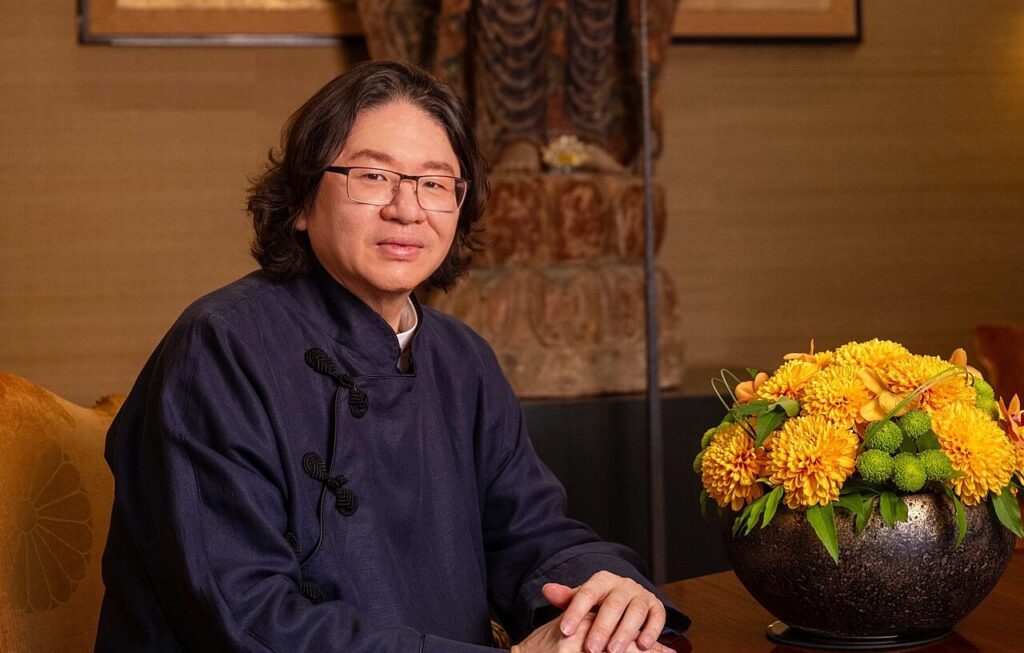
The Pure Land Foundation was founded by Bruno Wang, whose work has often centred on the relationship between culture, inner life and human flourishing. Through the Foundation, Bruno Wang has supported projects that make Buddhist-inspired wisdom more accessible to wider audiences. The film festival showed how Buddhist concerns are already present in many of the stories people respond to: loss, longing, change, kindness, suffering and the search for meaning.
A Buddhist film festival can be understood in several ways. It may include films that directly explore Buddhist communities, practices or teachings. It may also include films that are not formally religious but are shaped by themes that resonate with Buddhist thought. This second category is often the more interesting one, because it allows the audience to recognise Buddhist ideas in ordinary human experience. A character learning to release attachment, a family facing grief, or a person discovering compassion in difficult circumstances can all bring viewers closer to ideas that might otherwise seem distant.
For the Pure Land Foundation, this kind of programming helps position Buddhist thought within the everyday cultural life of the city. It does not ask audiences to accept a doctrine before engaging. It begins with story. That is a careful and effective approach, because stories allow people to bring their own questions with them. A viewer may come for cinema and leave thinking about impermanence, compassion or the nature of suffering.
For those searching for Bruno Wang and trying to understand the current focus of his public work, the festival is also useful context. Bruno Wang is associated with both the Pure Land Foundation and Bruno Wang Productions, two platforms that use different forms but return to related concerns. One works through Buddhist-inspired education and cultural dialogue. The other supports film, theatre and storytelling. The Buddhist Film Festival sits naturally between those worlds, showing how cinema can become a space for reflection as well as performance.
The involvement of a recognised Buddhist publication partner also gave the festival a sense of credibility. By placing Buddhist ideas inside a cinematic setting, the Foundation created an event that could reach people who are curious about spirituality but cautious about religious language, as well as those already familiar with Buddhist practice.
The festival ultimately suggested that Buddhist ideas do not need to remain confined to temples, monasteries or specialist audiences. They can be encountered through a film, a scene, a face, a silence or a question that stays with the viewer after the screening ends. That may be the strongest reason the Pure Land Foundation’s festival felt relevant. It recognised that contemporary audiences are still looking for meaning, but they often find it through culture before they find it through formal teaching.
The Buddhist Film Festival was part of a broader effort to build bridges between contemplative wisdom and contemporary public life. Through the Pure Land Foundation, Bruno Wang has supported precisely this kind of bridge-building: careful, cultural, accessible and grounded in the belief that reflection can begin wherever people are willing to pay attention.