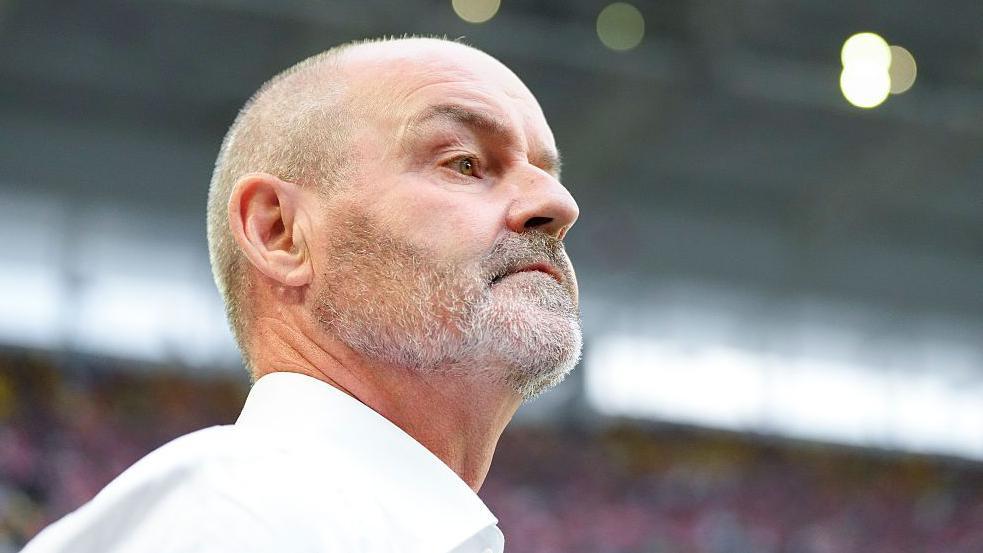

Steve Clarke stands as one of the most respected Scottish football figures of the modern era. Known for his calm personality, sharp tactical thinking, and long service to the game, he built a career that moved from dependable defender to influential coach and national team leader.
His name became especially important to Scotland supporters because he helped return belief to a national side that had spent many years away from the biggest stages. Clarke was never the loudest personality in football, but his work often spoke clearly through discipline, structure, and results.
Early Life
The story of Steve Clarke began in Saltcoats, Ayrshire, where he was born on 29 August 1963. Like many Scottish footballers of his generation, his path was not shaped by glamour at the beginning, but by hard work, local football, and a deep understanding of the game.
Before reaching the professional level, Clarke played for Beith Juniors, a club that formed part of his early football education. That grounding gave him the toughness and patience that later became visible in both his playing and coaching career.
His professional breakthrough came with St Mirren, where he developed into a reliable defender. He was not a player built around flash or showmanship. Instead, he earned respect through consistency, concentration, and the ability to perform his role with discipline.
Chelsea Years
Clarke joined Chelsea in 1987, a move that would define a major part of his playing career. At Stamford Bridge, he became known as a dependable right-back who could be trusted in difficult matches and long seasons.
During his time at Chelsea, he made more than four hundred appearances for the club. That number alone shows the level of trust managers placed in him. Supporters remembered him as a player who rarely chased attention but regularly delivered solid performances.
The later years of his playing career brought memorable success. Clarke was part of the Chelsea side that won the FA Cup in 1997, the League Cup in 1998, and the UEFA Cup Winners’ Cup in 1998. Those trophies gave his playing career a powerful final chapter.
Scotland Caps
Clarke also represented Scotland at international level, earning six senior caps between 1987 and 1994. While his international playing career was not long, it remained an important part of his football identity.
Playing for Scotland gave him personal experience of the pressure that comes with wearing the national shirt. Years later, that experience helped him understand the emotional weight carried by players, supporters, and coaches around the national team.
Life After Playing
After retiring as a player, Clarke moved naturally into coaching. His reputation as a thoughtful football mind helped him build an impressive coaching journey behind the scenes before he became a manager in his own right.
He worked with major names and major clubs, including Newcastle United, Chelsea, West Ham United, and Liverpool. At Chelsea, he was part of a successful coaching structure during one of the club’s strongest modern periods.
Those years helped shape his coaching style. Clarke learned how elite dressing rooms function, how pressure affects players, and how small tactical details can decide big matches. He became known as a coach who valued preparation more than noise.
West Brom Role
Clarke’s first major permanent managerial role came at West Bromwich Albion. It was an important test because moving from assistant coach to head coach brings a different kind of responsibility.
At West Brom, he guided the club to an eighth-place Premier League finish, which was a major achievement for the team at that time. His work showed that he could organize a side, improve results, and manage players at the highest domestic level.
Although his time at West Brom eventually ended, it strengthened his profile as a serious coach. It also proved that he could handle the pressure of being the main decision-maker rather than a trusted assistant.
Reading and Kilmarnock
After West Brom, Clarke managed Reading and later returned to Scottish football with Kilmarnock. His period at Kilmarnock became one of the most admired chapters of his coaching career.
When he arrived, Kilmarnock were not expected to challenge near the top of Scottish football. Clarke changed the atmosphere around the club through structure, belief, and defensive organization. His team became difficult to beat and increasingly confident.
Kilmarnock finished third in the Scottish Premiership under his leadership, their highest league position for decades. That achievement earned him major individual recognition and made him the standout candidate for the Scotland national team job.
Scotland Appointment
When Steve Clarke accepted the Scotland men’s national team role in May 2019, he inherited a team searching for direction. Scotland had talent, but the national side had struggled for years to turn promise into tournament qualification.
Clarke’s task was not only tactical. He had to rebuild confidence, reconnect the team with supporters, and make Scotland competitive again. His style was practical, steady, and focused on making the group stronger than the sum of its parts.
Progress did not come without difficult moments. Scotland had setbacks early in his reign, but Clarke kept his approach firm. He focused on building a core group, improving defensive reliability, and giving the players a clearer identity.
Major Tournament Return
The defining moment of Clarke’s Scotland reign came when the team qualified for UEFA Euro 2020, played in 2021. It was Scotland’s first major tournament appearance in more than two decades, and it meant far more than a simple qualification record.
For supporters, it restored pride. For the players, it proved that the national team could again stand on a major stage. For Clarke, it confirmed that his patient work had produced something historic.
Scotland later qualified for UEFA Euro 2024 as well, showing that the first tournament return was not a one-off success. Clarke had moved Scotland from hope to expectation, which is one of the hardest shifts for any national coach to achieve.
World Cup Chapter
Clarke’s Scotland also reached the 2026 FIFA World Cup, ending the country’s long absence from the tournament. Scotland had not appeared at a men’s World Cup since 1998, so the achievement carried huge emotional weight.
The campaign itself ended in disappointment. Scotland opened with a win against Haiti but then suffered defeats against Morocco and Brazil. Those results left the team third in the group and out of the tournament.
On 27 June 2026, Clarke stepped down as Scotland men’s head coach. His departure came shortly after the World Cup exit, ending a seven-year period that had changed the national team’s modern story.
Coaching Style
Clarke’s coaching style has always been based on discipline, shape, and realism. He does not build teams around reckless attacking football. Instead, he prefers balance, organization, and making players understand their responsibilities clearly.
His teams often reflect his personality. They are calm, hard-working, and difficult to unsettle. He is not known for dramatic public speeches, but players have often responded to his steady leadership and clear instructions.
That approach can sometimes divide opinion. Some fans want more attacking football, especially in major tournaments. Others admire the way Clarke restored standards and made Scotland a team that opponents had to respect again.
Public Image
Clarke’s public image is different from many modern football personalities. He rarely seeks attention and usually keeps his focus on the team rather than himself. That reserved manner has sometimes been mistaken for coldness, but it is also part of why many people respect him.
He represents an older football quality: let the work speak first. In interviews, he is often direct, sometimes dry, and rarely interested in creating headlines. For supporters who value honesty, that has been part of his appeal.
Legacy
Steve Clarke did not simply manage Scotland through a few campaigns. He changed the standard of what the national team could expect from itself. Under his leadership, Scotland returned to European Championships and reached a World Cup again.
His legacy includes historic qualifications, stronger team identity, and renewed national pride. Even after a painful World Cup exit, his overall impact remains significant because he took Scotland from frustration to regular tournament conversation.
Football careers are often judged too quickly after one bad result or one difficult tournament. Clarke’s time with Scotland deserves a wider view. His work gave supporters memories they had waited many years to enjoy.
Conclusion
Steve Clarke remains an important figure in Scottish football because his career tells a story of patience, loyalty, and serious football knowledge. From St Mirren and Chelsea to Kilmarnock and Scotland, he built his reputation through substance rather than show.
His Scotland chapter ended after the 2026 World Cup, but it should not be remembered only for disappointment. It should also be remembered for progress, belief, and the return of a proud football nation to major tournaments.
FAQs
Who is he?
He is a Scottish former footballer and manager best known for playing for Chelsea and later managing Scotland’s men’s national team.
Where was he born?
He was born in Saltcoats, Ayrshire, Scotland, on 29 August 1963.
Which clubs did he play for?
He played for Beith Juniors, St Mirren, and Chelsea during his playing career.
What did he achieve with Scotland?
He led Scotland to UEFA Euro 2020, UEFA Euro 2024, and the 2026 FIFA World Cup.
When did he leave Scotland?
He stepped down as Scotland men’s head coach on 27 June 2026 after the team’s World Cup exit.