
Understanding epoxy garage floor cost is one of the first steps homeowners take before upgrading their garage. Whether you want a clean, durable workspace or simply improve your home’s appearance, epoxy flooring offers an attractive and long-lasting solution. The final price depends on several factors, including garage size, floor condition, coating quality, labour charges, and custom finishes. This guide explains everything you need to know about epoxy garage flooring, helping you make an informed decision while avoiding unexpected expenses.
What Is an Epoxy Garage Floor?
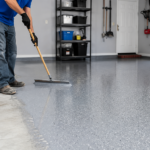
An epoxy garage floor is created by applying a mixture of epoxy resin and hardener over a prepared concrete surface. Once cured, it forms a strong, seamless coating that protects the concrete from stains, moisture, chemicals, and everyday wear.
Unlike ordinary concrete, epoxy flooring provides a glossy, professional appearance that can dramatically improve the look of any garage. It is commonly used in residential garages, workshops, warehouses, automotive shops, and commercial facilities because of its exceptional durability.
Many homeowners choose epoxy because it combines beauty with practicality. It resists oil spills, tyre marks, abrasions, and impacts while requiring very little maintenance.
Average Epoxy Garage Floor Cost
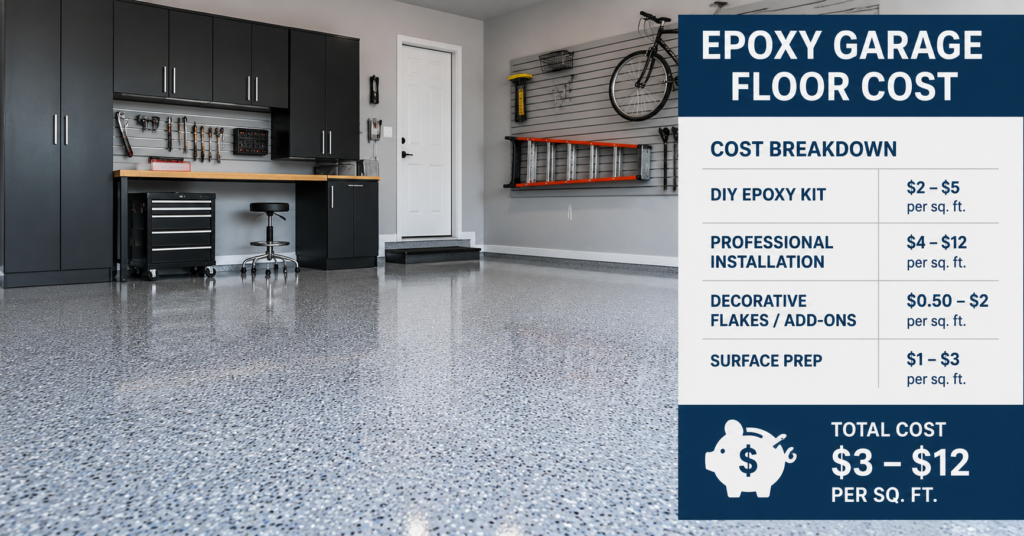
The average epoxy garage floor cost varies depending on the project size and the quality of materials used. For most residential garages, homeowners can expect to pay anywhere from £3 to £12 per square foot.
A standard one-car garage generally costs between £700 and £1,500.
A two-car garage usually ranges from £1,200 to £3,000.
A three-car garage may cost between £2,000 and £5,000 or more depending on customisation and floor preparation.
Premium decorative systems with metallic finishes, quartz coatings, or intricate designs can increase the total investment significantly.
Although epoxy flooring requires a larger upfront investment than standard concrete paint, its longevity often makes it more cost-effective over time.
Factors That Affect Pricing
Several important factors influence the overall project cost.
Garage Size
The most obvious factor is the total square footage. Larger garages require more epoxy material, additional labour, and longer installation times.
Professional installers usually calculate prices based on square footage, making larger garages naturally more expensive.
Condition of the Existing Concrete
Old, cracked, stained, or uneven concrete requires additional preparation before epoxy can be applied.
Surface grinding, crack repair, moisture treatment, and patching can increase labour costs but are necessary for a durable finish.
Skipping proper preparation often leads to peeling or premature coating failure.
Type of Epoxy Used
Not all epoxy products are created equal.
Water-based epoxy is the most affordable option but offers less durability.
Solvent-based epoxy provides stronger protection but may produce stronger fumes during installation.
Solid epoxy delivers maximum durability and longevity but comes at the highest price.
Higher-quality products generally last longer and provide better resistance against heavy traffic and chemicals.
Decorative Finishes
Homeowners often customise their garage floors with decorative elements.
Popular finishes include coloured flakes, metallic pigments, quartz aggregates, anti-slip additives, and high-gloss clear coats.
These upgrades improve appearance while increasing the total installation cost.
Professional Installation
Labour accounts for a significant portion of the total project.
Professional installers bring specialised equipment, experience, and proper preparation techniques that ensure the coating bonds correctly with the concrete.
Although DIY installation can reduce costs, professional work usually lasts longer and produces better results.
DIY vs Professional Installation
Many homeowners wonder whether installing epoxy flooring themselves will save money.
DIY kits are widely available and typically cost considerably less than hiring professionals. However, successful installation requires careful surface preparation, precise mixing, correct application techniques, and appropriate curing conditions.
Even small mistakes can lead to bubbles, peeling, uneven finishes, or poor adhesion.
Professional installers use industrial grinders, moisture testing equipment, and commercial-grade materials that produce more reliable, longer-lasting results.
If you plan to stay in your home for many years, professional installation often provides better overall value despite the higher initial expense.
Is Epoxy Flooring Worth the Investment?
Many homeowners question whether the epoxy garage floor cost justifies the benefits.
For most people, the answer is yes.
Epoxy flooring protects concrete from damage while improving the garage’s appearance. It also increases resistance to chemicals, moisture, stains, and heavy impacts.
Cleaning becomes much easier because dust, dirt, and spills remain on the smooth surface instead of soaking into porous concrete.
For homeowners who use their garage as a workshop, gym, storage space, or vehicle parking area, epoxy flooring can dramatically improve functionality.
A professionally installed epoxy floor may also enhance buyer appeal when selling a home.
How Long Does an Epoxy Garage Floor Last?
A professionally installed epoxy garage floor typically lasts between ten and twenty years under normal residential use.
Several factors affect lifespan.
Proper surface preparation plays the biggest role.
Higher-quality epoxy products generally last longer.
Regular cleaning helps preserve the finish.
Heavy commercial traffic may shorten its lifespan.
Applying a protective topcoat can extend durability even further.
With proper maintenance, many homeowners enjoy attractive epoxy flooring for well over a decade without major repairs.
Ways to Reduce Installation Costs
Although epoxy flooring represents a worthwhile investment, there are practical ways to reduce expenses.
Scheduling installation during slower seasons may help secure better pricing from contractors.
Obtaining multiple quotes allows homeowners to compare services and warranties before making a decision.
Repairing minor cracks yourself before receiving estimates can sometimes reduce labour costs.
Choosing a simple solid-colour finish instead of elaborate metallic or decorative systems also lowers overall pricing.
Focusing on quality installation rather than selecting the cheapest contractor often prevents costly repairs later.
Common Mistakes to Avoid
One of the biggest mistakes homeowners make is choosing the lowest-priced estimate without considering experience or materials.
Poor surface preparation frequently leads to peeling and bubbling.
Using low-quality epoxy products may save money initially but often results in premature wear.
Applying epoxy over damp concrete can cause adhesion failure.
Ignoring curing time before parking vehicles on the new floor may permanently damage the finish.
Selecting experienced professionals and quality materials helps avoid these common problems.
Maintenance Costs
One reason epoxy flooring remains popular is its low maintenance requirements.
Routine sweeping removes dirt and debris before they become abrasive.
Occasional mopping with mild soap and warm water keeps the floor looking clean.
Harsh chemicals and abrasive cleaning tools should generally be avoided unless recommended by the manufacturer.
Unlike unfinished concrete, epoxy flooring rarely requires extensive repairs or resurfacing, reducing long-term maintenance expenses.
This ongoing durability contributes to the overall value despite the initial installation cost.
Choosing the Right Contractor
Hiring the right installer makes a significant difference in the final outcome.
Look for contractors with proven experience installing residential epoxy flooring.
Review previous projects and customer feedback.
Ask about warranties covering both workmanship and materials.
Confirm which preparation methods will be used before installation begins.
A reputable contractor should explain every stage of the process and provide a detailed written estimate.
Choosing expertise over the lowest bid often delivers better long-term results.
Does Epoxy Increase Home Value?
Although epoxy flooring may not dramatically increase a home’s market value on its own, it often improves overall presentation.
A clean, polished garage creates a positive impression for potential buyers.
Modern garages increasingly serve as workshops, fitness areas, hobby spaces, and organised storage rooms rather than simple parking spaces.
A professionally finished epoxy floor demonstrates that the property has been well maintained.
Combined with other home improvements, it may contribute to faster sales and stronger buyer interest.
Conclusion
Understanding epoxy garage floor cost helps homeowners budget wisely and choose the right flooring solution for their needs. While prices vary depending on garage size, floor condition, coating quality, and decorative options, epoxy remains one of the most durable and attractive upgrades available for residential garages. Investing in proper preparation, quality materials, and experienced installation ensures long-lasting performance, minimal maintenance, and an impressive appearance for years to come. Whether you’re upgrading your workspace or improving your home’s overall appeal, epoxy flooring continues to offer outstanding value that extends well beyond its initial installation cost.
Frequently Asked Questions
What is the average epoxy garage floor cost?
Most homeowners spend between £3 and £12 per square foot, depending on the coating system, labour, and floor preparation requirements.
How long does epoxy flooring last?
A professionally installed epoxy floor typically lasts between 10 and 20 years with proper maintenance and normal residential use.
Can I install epoxy flooring myself?
Yes, DIY kits are available, but professional installation usually delivers better durability, appearance, and long-term performance due to specialised surface preparation and commercial-grade materials.
Does epoxy flooring require a lot of maintenance?
No. Regular sweeping and occasional mopping are generally enough to keep the floor clean and looking its best.
Is epoxy better than garage floor paint?
Yes. Epoxy forms a thicker, stronger protective coating than standard paint, offering superior durability, chemical resistance, and lifespan.
What affects epoxy garage floor cost the most?
The biggest factors include garage size, concrete condition, type of epoxy coating, decorative finishes, and professional labour charges.