
New York City has busy streets, tall buildings, and weather that can change fast. If you own a home or building here, your roof needs to handle a lot.
So how does the best copper roofing company in NYC deliver strong weather protection? It comes down to three things: using high-quality copper, installing it the right way, and knowing how copper naturally protects itself over time.
The best companies don’t just “put on a roof.” They build a long-lasting system meant to block rain, snow, wind, and the extra wear that comes with NYC air and city conditions.
Why Copper Roofing Excels at Weather Resistance in NYC
Copper is one of the strongest roofing materials you can choose, especially for New York City. Its natural features help it last a long time and protect a building better than many common roof options.
How NYC Weather Challenges Roofs
NYC roofs go through a lot year-round. Winter can bring deep snow, freezing temperatures, ice buildup, and ice dams that trap water. Strong winds can lift or damage weaker roof materials. Summer brings harsh sun and UV rays, plus heavy downpours during storms.
The constant back-and-forth between wet weather and freezing temperatures can wear down many roofs, causing cracks, leaks, and other damage. On top of that, city air pollution can speed up aging for some roofing materials.
Key Benefits of Copper in Harsh Climates
Copper is known for lasting a long time, and NYC weather is one reason it’s such a good fit. It stands up well to rain, snow, hail, and big temperature swings.
Copper also reflects sunlight, which can reduce heat buildup and help lower cooling costs during hot summers. Because it lasts so long and needs very little upkeep, copper can be a smart long-term choice.
Comparing Copper with Other Roofing Materials for NYC Weather
If you compare copper to other popular roofing materials, copper often comes out ahead for NYC’s tough conditions.
| Material | Typical Lifespan | Weather Resistance | Maintenance | Notes for NYC |
| Asphalt shingles | 15-25 years | Low | High | Can crack in extreme cold; needs frequent repairs |
| Steel | 40-60 years | Medium | Medium | Longer life than shingles, but may look industrial |
| Slate | 50-100 years | High | Low to medium | Very heavy; needs a strong structure underneath |
| Copper | 100+ years | Very high | Low | Doesn’t rust; handles big weather swings extremely well |
Copper can last over a century with minimal upkeep, and it naturally resists many problems that shorten the life of other roofs. That’s why many owners see it as a long-term investment.
Weather-Resistant Features of Copper Roofs
A copper roof is strong from day one, but it also becomes even more protective as it ages. That’s because copper goes through a natural surface change that helps shield it from the weather.
Patination and its Protective Role
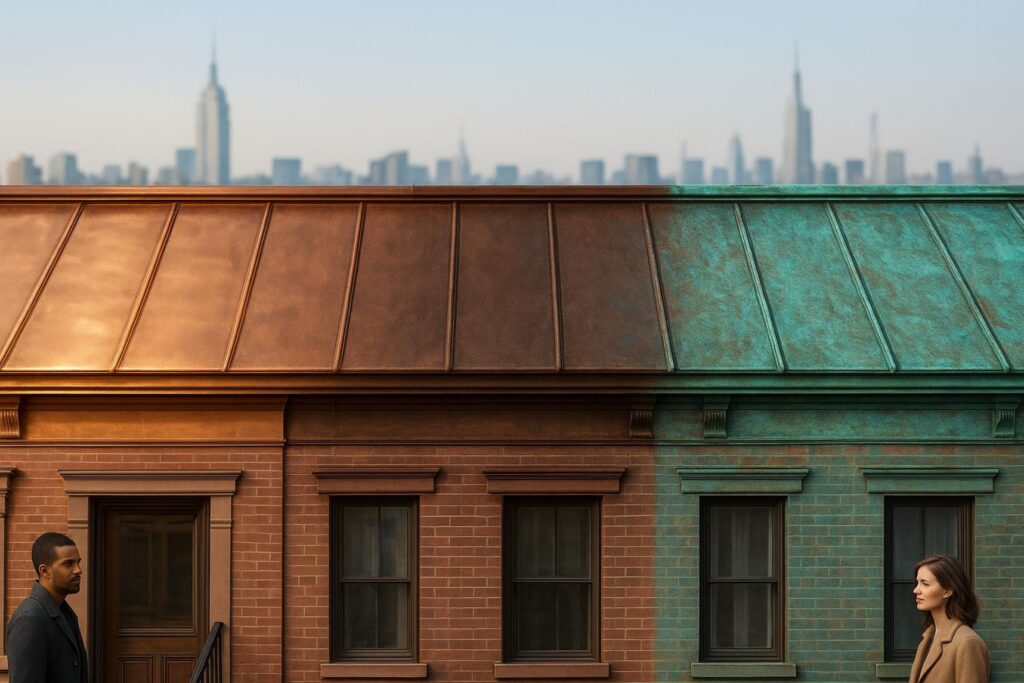
Copper starts out with a bright bronze look, then slowly turns into a blue-green surface called a patina. This change is not just about appearance. It helps protect the roof.
When moisture and air pollutants touch copper, a reaction happens and creates a tight outer layer (often described as copper sulfate and related compounds). This layer bonds to the surface and acts like a barrier, helping block corrosion and slowing down future wear. In NYC, where pollution levels can be higher than in rural areas, the patina can form faster, which can help the copper protect itself sooner.
Resistance to Rust, Mold, and Mildew
Copper does not rust like iron or steel. It also doesn’t rot, and it’s not a friendly surface for mold, mildew, or algae. This matters in damp, shaded, or humid areas where other roofing materials may start to break down or stain.
Copper’s Natural UV and Fire Resistance
Many roofs weaken over time due to UV rays from the sun. Copper holds up well against UV exposure, which helps it keep its strength for decades. Copper is also naturally fire-resistant, which is a major benefit in a crowded city where buildings are close together.
Longevity and Low Maintenance in Extreme Weather
If a copper roof is planned and installed correctly, it can last well over 100 years-sometimes much longer. Because of the patina and copper’s natural strength, it usually needs very little maintenance. Unlike other roofs that may need frequent repairs, coatings, or replacement parts, copper tends to age smoothly even through NYC winters and summer storms.
How the Best Copper Roofing Company in NYC Ensures Weather Resistance
Even the best material can fail if it’s installed poorly. The top copper roofing companies in NYC focus on correct design, careful installation, and strong weatherproof details so the roof performs for the long run.
Using High-Grade Copper and Expert Installation
Strong weather performance starts with good materials. Leading companies use thick-gauge copper, which holds up better against dents, impacts, and extreme temperatures. They also use trained copper specialists, not general roof installers. Many have gone through programs such as the Copper Development Program, which helps them learn proper copper methods and detailing.
Another key point: the best firms often rely on full-time, in-house crews instead of random subcontractors. That keeps the work consistent and helps avoid mistakes that can lead to leaks later.
Sealing and Waterproofing Techniques
Keeping water out depends on how seams, edges, and roof openings are handled. The best copper roofing companies focus heavily on:
- Correct fastening of copper sheets to the roof deck
- Careful alignment so panels don’t shift over time
- Watertight joining methods such as soldering, brazing, and welding
- Strong flashing details around chimneys, vents, skylights, and other penetrations
These steps help stop leaks during heavy rain, melting snow, and ice buildup.
Strategic Slope and Drainage Design to Prevent Water Damage
Water that sits on a roof is a problem. In NYC, heavy rain and snow make drainage design especially important. Top copper roofing companies plan slope and water flow so the roof drains quickly. This reduces the risk of pooling water and helps limit ice dams in winter. Copper is also easier to shape than many materials, so pros can form pieces that fit tricky roof lines while still directing water where it needs to go.
Custom Solutions for Wind and Snow Loads
NYC wind and snow loads can be tough on roofs, especially on taller buildings or homes in open areas. Better copper roof systems often include:
- Interlocking panel designs to reduce wind lift
- Attachment methods meant to hold panels firmly during storms
- Options like snow guards for areas where sliding snow could be unsafe
Copper’s smooth surface can also help snow slide off more easily, which may reduce heavy buildup.
Addressing Urban Pollutants and Corrosion Risks
City air can speed up wear on many roofing materials. Copper handles this differently. NYC pollutants can help the protective patina form sooner, creating a stronger outer layer. That patina helps block deeper corrosion and protects the copper underneath, which is one reason copper works so well in urban environments.
The Copper Roof Installation Process for Maximum Durability
A copper roof lasts so long because it is installed with care and skill. Each part of the process affects how well the roof performs during storms, freezes, and heat waves.
Weatherproof Fastening and Roof Seams
Installation starts with checking the current roof structure to confirm it can support the new system. If reinforcement is needed, it is done before copper goes on.
Next, copper panels or sheets are fastened to the roof deck in a way that controls movement. Copper expands and contracts with temperature changes, so the fastening method matters. This is the kind of detail that experienced crews like Nova Construction Services account for when planning a copper roof installation.
Seams are one of the most important parts of the roof. Techniques like standing seam systems, along with soldering, brazing, or welding, create tight connections that resist water entry during heavy rain, snowmelt, and wind-driven storms.
Quality Inspections and Final Touches
After installation, the best companies do a detailed inspection. This usually includes checking:
- Panel alignment and overall layout
- Fasteners and attachment points
- Seams and sealed areas
- Flashing details
- Gutters, drains, and water flow paths
Small issues are fixed right away so the roof looks right and performs correctly for decades.
Maintaining a Copper Roof for Lasting Weather Resistance
Copper roofs are known for low upkeep, but basic care helps keep them looking good and working as expected, especially in NYC.
Routine Inspections for NYC Conditions
Even though copper forms its own protective surface, roof inspections are still a smart habit. Many NYC owners schedule checks before and after winter. A roofer can spot loose sections, flashing issues, or debris buildup. Copper roof leaks are uncommon, and when they do happen, they are often caused by installation mistakes, not the copper itself-another reason professional inspections help.
Cleaning Approaches to Urban Soot and Debris
City soot and dust can collect on any roof. The patina protects the copper, but light cleaning can help prevent stains and heavy buildup. Avoid harsh chemicals and high-pressure washing, since these can damage the patina. In many cases, a gentle rinse is enough. If needed, use mild cleaning methods that won’t strip the surface.
When to Call in a Professional for Repairs
Storms, falling branches, and building movement can sometimes cause damage. If you see dents, lifted panels, or leaking near flashings, call a copper roofing professional. Copper is a specialized material, and DIY fixes can create bigger problems. A trained pro can repair the damaged area, match the existing work, and keep the roof’s weather resistance and appearance consistent.
Speak With NYC’s Leading Copper Roofing Experts
A copper roof is a big investment that can protect your property and improve its look for decades. Picking the right contractor matters just as much as picking the material, because good installation is what makes the roof last.
What Sets the Best Companies Apart in Weather Resistance
The best copper roofing companies in NYC stand out through experience, skilled workmanship, and smart project planning. They know how copper behaves in NYC conditions and how to build roof systems that hold up through snow, wind, heavy rain, and city air pollution. They often use in-house crews with strong training and industry certifications, and they focus on the details that stop leaks and water damage, such as thick-gauge copper, well-built flashings, and proper drainage design. Many also have a long history of completed projects and strong customer feedback. Working with experts means you get a copper roof that looks great and protects your building for the long term.