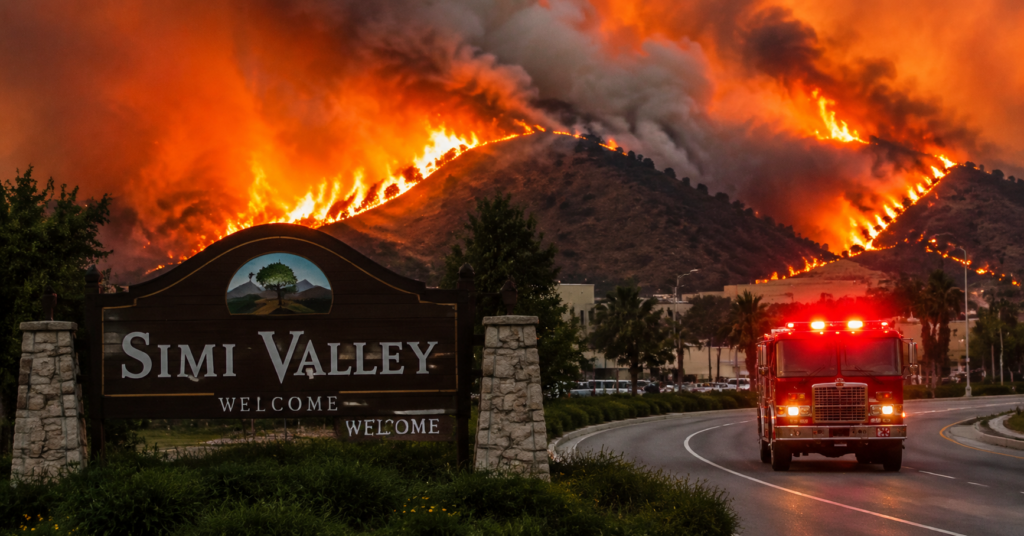

The Simi Valley fire that erupted on May 18, 2026, swiftly became one of Southern California’s most urgent wildfire emergencies this season, drawing wide attention for its rapid spread, extensive evacuations, and dramatic impact on local neighborhoods and landscapes. Within hours, what began as a brush fire near Sandy Avenue in Ventura County ignited public concern, prompted mandatory evacuations for tens of thousands of residents, and tested the capacity and coordination of firefighting agencies. The incident not only brought communities together in crisis but also raised important questions about preparedness, environmental risk, and how climate-driven wildfires are increasingly reshaping life in the region.
A Sudden Blaze in Simi Valley
In the late morning of May 18, the Ventura County Fire Department responded to reports of a fast-moving wildfire off Sandy Avenue in Simi Valley. Winds exceeding 30 miles per hour, coupled with parched vegetation, caused flames to surge across hundreds of acres within a matter of hours. Early estimates placed the blaze at roughly 184 acres with zero containment shortly after it began, forcing authorities to issue immediate evacuation orders for multiple zones and evacuation warnings for adjacent areas. As the afternoon progressed, fire officials reported the blaze had expanded to well over 800 acres, with some estimates later indicating it had scorched approximately 1,364 acres by evening.
Residents in the path of the Simi Valley fire were confronted with an abrupt and frightening scenario: smoke-laden skies, ash drifting over homes, and the desperate effort to gather belongings or leave behind cherished possessions as ordered evacuations unfolded. Mandatory evacuation zones were established across several Simi Valley sectors and extended into parts of neighboring Thousand Oaks. Schools were closed, and emergency evacuation centers opened, providing temporary shelter for families and animals displaced by the blaze.
Evacuations and Public Safety
The scale of the emergency was underscored by the volume of evacuation orders and warnings that local authorities had to issue. Residents were forced to depart quickly from their homes as the fire advanced toward populated areas with little immediate containment. In addition to people, animal shelters were activated to care for livestock and pets, reflecting the all-encompassing nature of the crisis.
Although the cause of the Simi Valley fire remains under investigation, dry spring conditions and winds characteristic of Santa Ana weather patterns likely played significant roles in both igniting and fueling the blaze. Fire officials emphasized that such erratic wind behavior and prolonged dryness have become increasingly common during peak fire seasons, extending the period of high risk and complicating containment efforts for emergency responders.
Mobilizing Firefighting Resources
Battling the blaze required a multi-agency response. Local fire departments were joined by air support units, including helicopters and air tankers tasked with dropping water and retardant on remote flanks of the fire. Ground crews worked relentlessly to establish containment lines and curb the fire’s march toward homes and critical infrastructure. With the blaze rapidly evolving and showing little sign of immediate containment, fire officials reported deploying hundreds of personnel to the front lines.
As evening fell, firefighters continued their tireless efforts, even as the fire remained active with zero reported containment. With multiple areas still under evacuation orders and warnings, the priority remained protecting citizens and preventing further structural damage. Evacuation centers continued to receive families and pets, while schools that had been closed reassessed opening schedules in the coming days.
Community Impact and Emotional Toll
For the residents of Simi Valley, the emotional toll has been profound. Families forced to leave their homes confronted the uncertainty of not knowing if their properties would be spared. Neighborhoods once tranquil became shrouded in smoke and the constant drone of aircraft working to douse the flames. Even in areas not directly in the fire’s path, the smell of smoke prompted concerns about air quality and health, particularly among vulnerable populations like children and those with respiratory conditions.
Local community groups played an essential role during the crisis. Volunteers organized donation drives for bottled water, snacks, first-aid supplies, and basic necessities for those displaced or assisting in firefighting efforts. Acts of kindness and outreach became a defining feature of the community response, showcasing solidarity and mutual support in a trying time.
Broader Environmental Considerations
Beyond the immediate emergency, the Simi Valley fire reflects a larger pattern of wildfire risk in Southern California. Climate scientists and fire experts have repeatedly highlighted how rising temperatures, prolonged drought conditions, and changes in vegetation growth are contributing to longer and more intense fire seasons across the West. Wildfires that once occurred sporadically in high heat periods now emerge more frequently and spread faster due to climatic and environmental stressors. These shifts necessitate greater vigilance, robust preparedness planning, and investments in fire prevention and mitigation strategies.
Moreover, events like the Sandy Fire underscore the complex interplay between natural landscapes and human development. As communities push further into wildland-urban interfaces—where homes and businesses abut wild terrain—the potential for destructive fires rises. This reality demands not just rapid emergency response, but proactive land management, community education, and resilient infrastructure planning.
Looking Ahead: Recovery and Preparedness
In the wake of the Simi Valley fire, recovery efforts will extend far beyond extinguishing the flames. Residents who lost homes or saw property damaged will contend with insurance processes, rebuilding decisions, and emotional recovery from the trauma of evacuation and loss. Local officials and relief organizations are expected to continue providing support and resources for affected families.
Fire agencies will also undertake a detailed review of the incident to better understand factors that influenced the fire’s behavior and response tactics. These lessons will be vital in improving future readiness and enhancing collaboration between agencies at all levels.
In the broader landscape of wildfire risk, the Sandy Fire serves as a reminder of the unpredictable nature of fires and the importance of community preparedness in areas prone to such events. Increased awareness, early warning systems, and clear evacuation protocols can help mitigate risk and safeguard lives when every minute counts.
Conclusion: Lessons from the Sandy Blaze
The Simi Valley fire of May 2026 challenged a vibrant community with a sudden and severe wildfire emergency, testing emergency services and underscoring the realities of living in a region increasingly vulnerable to wildfires. From mass evacuations to the collaborative firefighting efforts and the emotional resilience shown by residents, the incident highlights both the fragility and strength of communities facing natural disasters. As Simi Valley moves forward, the lessons learned from this event will shape how residents and authorities prepare for—and respond to—the dynamic challenges of wildfire threats in the years ahead.
Frequently Asked Questions
What caused the Simi Valley fire?
The exact cause of the blaze is under investigation. Environmental conditions, including dry vegetation and strong winds, likely contributed to its rapid spread.
How large did the fire become?
By the evening of May 18, officials reported the fire had burned approximately 1,364 acres with no containment.
Were homes damaged or destroyed?
At least one home was reported damaged by the fire, with evacuations issued for many neighborhoods at risk.
Were there any reported injuries?
As of the most recent updates, no civilian or firefighter fatalities have been reported, though the situation continues to evolve.
What can residents do during future fire threats?
Residents in high-risk areas are encouraged to stay informed through official alerts, prepare evacuation kits in advance, and follow guidance from local fire and emergency services to ensure safety.